Is Depop Legit? Honest Depop Review for Sellers in 2026
by Joem Castones •March 23, 2026

Is Depop Legit? Honest Depop Review for Sellers in 2026
With over 56 million registered users and a reputation as the Instagram of fashion, Depop has cemented itself as the cultural epicenter for trendy fashion, vintage finds, and circular style. This mobile-first marketplace is the undisputed home of Gen Z and young Millennial shoppers, and unlike traditional marketplaces, functions as a social-selling hybrid where your shop is as much a brand as your followers are customers.
But for a modern reseller looking to scale, the platform’s trendy interface raises some serious questions: is Depop actually legit? Are you going to get paid on time, or is the app's social-first nature a breeding ground for scams? You might be wondering if the high-effort aesthetic requirement is actually worth your time.
Short answer: Yes, Depop is a legitimate, social e-commerce marketplace primarily used for buying and selling secondhand fashion, vintage clothing, and unique accessories. However, it requires a mix of creative marketing and logistical discipline to navigate safely and successfully.
Here’s the long answer.
What Is Depop?
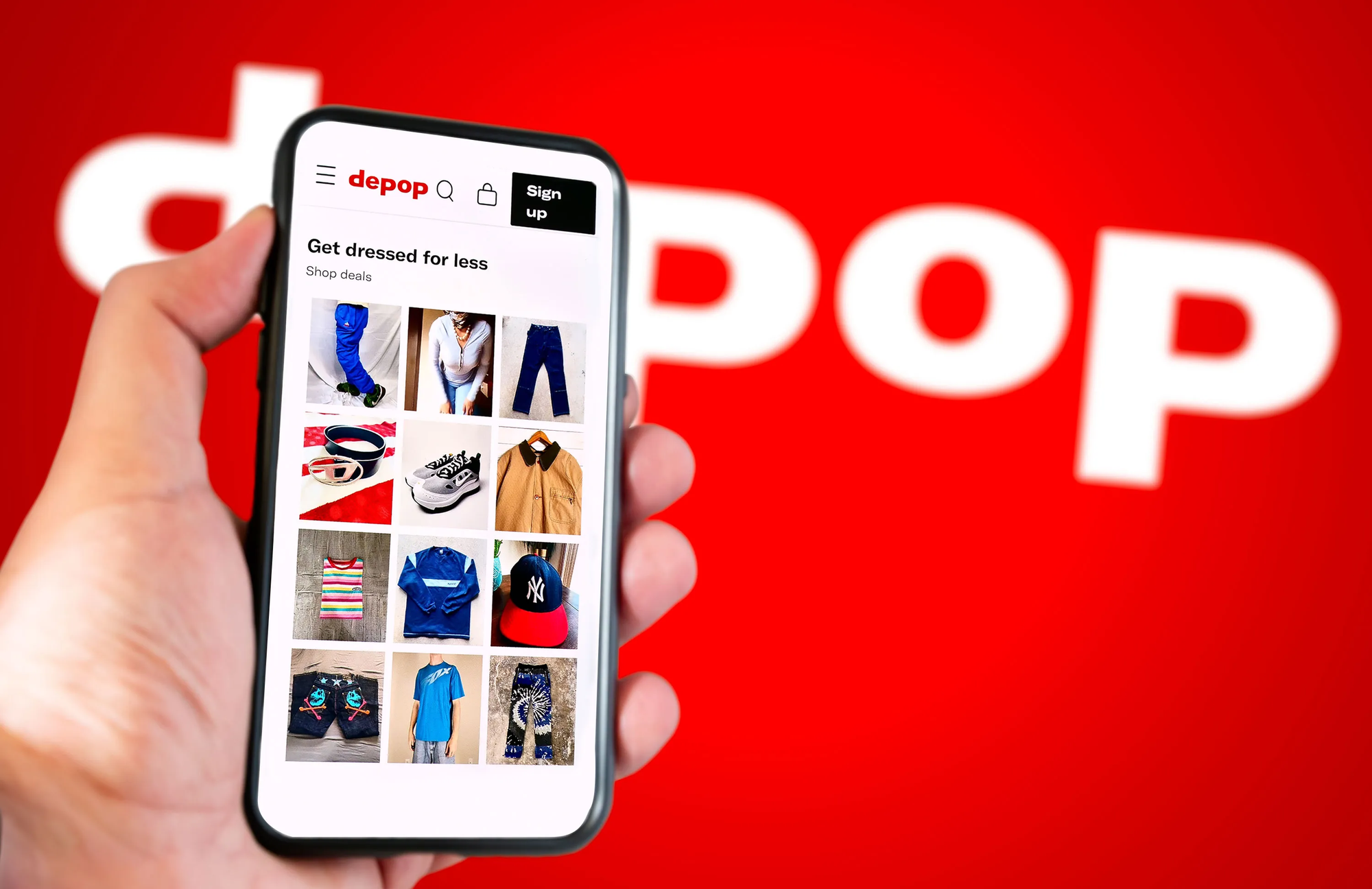
Founded in 2011 by Simon Beckerman as a social extension of an Italian fashion magazine, Depop evolved into one of the biggest fashion resale apps that defined Gen Z's secondhand shopping habits. It specializes in secondhand fashion, allowing creators to build themselves as digital boutiques. Unlike traditional marketplaces, Depop thrives on community, trends, and a very specific cool factor that appeals primarily to the under-26 demographic.
The platform achieved unicorn status in 2021 when it was acquired by Etsy for $1.6 billion during a pandemic-fueled boom in digital resale. In February 2026, eBay announced its acquisition of Depop from Etsy for $1.2 billion, aiming to integrate its niche cultural appeal with eBay's global scale.
How Depop Works for Sellers

On Depop, building an aesthetic and following is as critical as the items themselves. Two sellers can list the same item and get completely different results depending on styling, lighting, and how well the photos capture a refined, curated vibe.
The social nature of the app means your listing is your advertisement. You start by uploading photos and videos. You then write a description using relevant hashtags and keywords to help your items appear in search.
This is where you must be strategic: include the brand, measurements, and specific aesthetic keywords (like grunge, coquette, or streetwear). You are allowed hashtags and can select from a wide array of attributes like material, color, and style to help your item appear in filtered searches.
Once an item sells, the buyer pays through Depop Payments, which supports credit cards, Apple Pay, and Google Pay. When it comes to logistics, you can choose to use Depop Shipping via USPS (which provides a printable label) or ship the item manually. You can choose to pay for this yourself or have the buyer cover the cost.
If you choose to ship using your own carrier, you must manually upload the tracking number to the app within 7 days. If you don't provide tracking, you lose your seller protection and your payout will be significantly delayed.
If you use a Depop shipping label or manually add valid tracking information, your payout is triggered 2 working days after the in-app tracking updates to ‘Delivered.’ If tracking isn't provided or the carrier doesn't sync with the app, Depop will hold the funds for 10 working days from the sale date to ensure the buyer has received the item and is satisfied. Once released, the funds move from your Depop Balance to your linked bank account, usually arriving within 1–3 additional business days.
Depop Fees Breakdown

One of the biggest updates in recent years is Depop’s shift toward a 0% seller commission model in the US and UK. This was designed to make it one of the most competitive apps in the marketplace. However, "0% commission" doesn't mean "100% profit." You still have to account for the Payment Processing Fee (3.3% + $0.45) and the optional 8% Boosting Fee if you want your items featured at the top of search results.
- No seller fee
- 3.3% + $0.45 payment processing
Let’s run a $30 sale.
$30 → minus processing ($1.44)
Take-home $28.56
On a $100 sale.
$100 → minus processing ($3.75)
Take-home $96.25
Is Depop Safe?

A common question for newcomers. For sellers, the platform provides Depop Seller Protection, which covers you against “Item Not Received” claims as long as you ship to the address on the receipt and provide valid tracking.
Depop relies on a more open-ended protection policy. If a buyer claims an item isn't as described, they can open a dispute through Depop Payments or PayPal (if used). This process can sometimes feel slow, as it often requires back-and-forth emails with support. While Depop protects you against unauthorized chargebacks if you have valid tracking, the resolution window can stay open for weeks, leaving your funds in limbo.
You must be vigilant about the occasional Depop scam. Like apps like it, the most frequent issues involve out-of-app transactions. If a buyer asks you to message them on WhatsApp or pay via Venmo/CashApp, decline immediately. These transactions are not protected, and you will have no recourse if the buyer disappears. As long as you stay within the app's ecosystem, Depop is a secure environment for doing business.
Pros of Selling on Depop
- Massive Gen Z Reach: If you sell Y2K, vintage, or streetwear styles, this is where your target audience lives and breathes. A younger buyer base also means they’re much more willing to experiment.
- High Profit Margins: With 0% commission, your per-item profit is often significantly higher than on platforms like Poshmark or eBay.
- Brand Building: The social nature of the app allows you to build a following. Repeat customers are common if you have a distinct style.
- Creative Freedom: Unlike the sterile listings of Mercari, Depop encourages artistic photography and storytelling, which can help justify higher price points for vintage items.
Cons of Selling on Depop
- High Maintenance: More effort is required for presentation and photography. You need to engage with the community, refresh listings, and maintain an aesthetic grid to stay relevant.
- Trend Volatility: What’s hot on Depop changes weekly. If you source a large haul of a specific trend that dies out, you may be left with dead inventory. It also goes without saying that Depop is slow for basics.
- Customer Service Lag: Many users noted that getting a human on the phone for a dispute is nearly impossible as most support is handled via a slow-moving ticketing system.
Who Should Sell on Depop?

If you have an eye for photography, enjoy keeping up with TikTok trends, and specialize in clothing, shoes, or accessories, you will thrive in Depop. It is especially lucrative for those who thrift high-demand vintage pieces that can be sold at a premium.
However, if you are a high-volume seller of boring household goods, tools, or generic electronics, you should look elsewhere. Depop presents like a social feed, and buyers scroll visually. Items don’t need search demand if they look interesting enough. Depop asks more effort upfront but can reward differentiation instead of volume. It’s great until your inventory is mostly black jeans and mall brands.
The Verdict
So, is Depop legit? Absolutely. It is a powerful, high-traffic marketplace that offers some of the best seller margins in the industry for fashion. The main downsides are the time-consuming listing process and the social grind required to maintain visibility. If you're a fashion-focused reseller who treats their shop like a brand, it's worth adding to your selling strategy.
If you decide to sell on Depop alongside other marketplaces, SellRaze can help you crosslist listings across all of them from one place.