7 Apps Like eBay for Reselling in 2026
by Joem Castones •March 4, 2026

Everything has a place. Everything can be found. Since its inception as a pioneer of the digital auction, eBay has transformed into a global e-commerce titan, balancing its roots in person-to-person sales with a modern, high-speed retail environment. Today, it remains a primary destination for value seekers, collectors, and niche hobbyists looking for items ranging from vintage trading cards to rare automotive parts.
As of early 2026, eBay maintains a massive global footprint with approximately 135 million active users. and 18.3 million active sellers worldwide. The platform, defined by its hybrid auction-style listings and a robust Seller Hub for business analytics, remains the premier choice for re-commerce entrepreneurs who thrive on the platform's 190+ country reach.
But scale comes with friction. Competition in eBay is relentless, and it can be difficult for premium brands to maintain high price points without being undercut by second-hand listings. Add to that a complex web of final value fees, insertion fees, and mandatory payment processing costs that can significantly eat into thin margins. Pricing requires research, and for many sellers, it becomes the backbone and the headache all the same.
Given these hurdles, many are looking toward strong eBay alternatives. Here are seven apps like eBay in 2026, depending on whether you need faster turnover, better margins, or less attachment to item specifics.
Mercari — the Transaction Machine
Best for: Sellers who want simplicity and broader categories (and fewer decisions).

Mercari started in Japan in 2013 and has since expanded global resale powerhouse, building a massive user base that shops across clothing, electronics, and home goods.
What makes it different from platforms like eBay is its streamlined, transaction-focused nature. While eBay offers deep customization for professional storefronts, Mercari eliminates the complexity of auctions, HTML descriptions, and elaborate "About Me" pages. It transaction-focused, like a digital garage sale where buyers and sellers value speed and simplicity over the pro-seller tools found on larger platforms.
Fee structure:
- Seller commission: 10%
- Payment processing: None
- Shipping: Prepaid labels or self-shipping
Who it’s best for: Mixed inventory, declutterers, casual resellers who hate overproduced listings.
Pros:
- Extremely simple listing process
- Works across categories beyond fashion
- Buyers purchase without much interaction
Cons:
- Lower average sale price than similar platforms
- Less brand discovery
- Less discovery for niche fashion
Unlike websites like eBay, which often requires sellers to calculate complex shipping zones and manage various carrier accounts, Mercari offers simplified prepaid labels with fixed rates based on weight, often providing cheaper options for small, lightweight items under one pound. Where eBay might charge a Final Value Fee that varies significantly by category, Mercari keeps its costs straightforward with a flat 10% seller fee on the item price and buyer-paid shipping.
Facebook Marketplace — the Chaos that Moves Inventory
Best for: Local sales and speed over perfection.

Facebook Marketplace launched in 2016 and quickly dismantled the traditional classifieds model by leveraging the social profiles we already use. Because it is integrated directly into the Facebook app, it taps into its massive 1.2 billion monthly user base that isn’t necessarily shopping, but stumbles upon items while scrolling their feed.
While sites like eBay focus on global reach and professional storefronts, Facebook Marketplace is unique with its zero-fee local listings, utilizing real identities to build trust and simplifying the selling process for everything from vintage furniture to everyday household goods.
Fee structure:
- Seller commission: None for local pickups, 10% shipped ($0.80 minimum)
- Payment processing: Included when shipping
- Shipping: Local meetups or platform checkout
Who it’s best for: Bulky items, quick flips, sellers who want fast cash without shipping.
Pros:
- Massive built-in audience
- Minimal listing barrier
- Great for moving inventory quickly
Cons:
- Buyer reliability varies
- Less structured protection
- Communication can be inconsistent
On eBay, a $20 desk is a liability because of the freight costs. On Facebook Marketplace, it’s a quick Tuesday flip. While you lose the global reach and professional seller protections of a major marketplace, you gain a level of simplicity and profit margin that is impossible to achieve when you have to box up every sale.
Depop — the Outfit is the Listing
Best for: Anyone whose items benefit from styling rather than bulk listing.
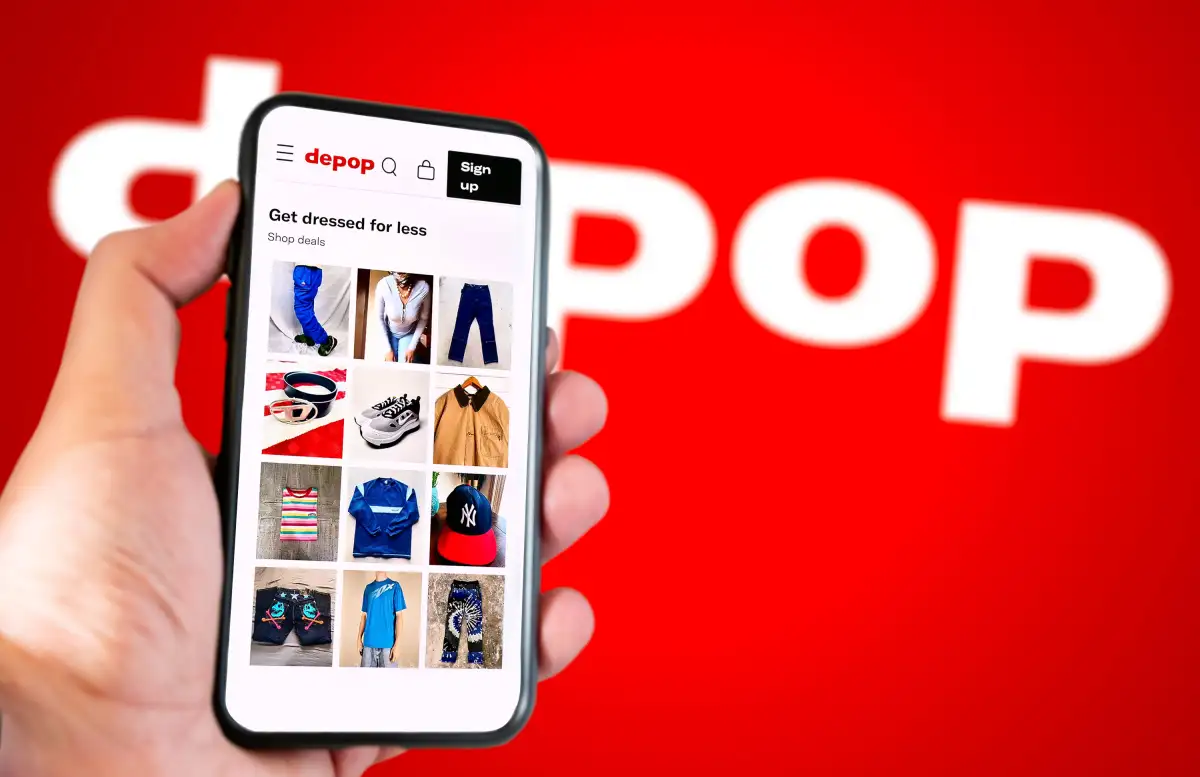
Depop launched in 2011 and grew into one of the biggest fashion resale apps for younger buyers. The experience leans heavily into aesthetics. Two sellers can list the same item and get completely different results depending on styling, lighting, and how well the photos capture a refined, curated vibe.
Where eBay is built on a massive search engine and auction structure for almost any category, Depop is much akin to visual discovery than structured shopping. On Depop, building an aesthetic and following is as critical as the items themselves. On eBay, your success is largely determined by title optimization and competitive pricing against thousands of similar listings.
Fee structure:
- Seller commission: None
- Payment processing: 3.3% + $0.45
- Shipping: Seller chooses own shipping or platform labels
Who it’s best for: Vintage sellers, streetwear, handmade, niche fashion.
Pros:
- Strong Gen Z buyer base willing to experiment
- Visual discovery works in your favor if your photos are good
- Higher price tolerance for unique pieces
Cons:
- Slower for basics and the boring
- More effort required for presentation and photography
- Buyer communication can be unpredictable
If eBay is a global warehouse for moving high-volume stock, Depop is a digital boutique for trending flips. And compared to most eBay alternatives, buyers on Depop scroll visually, and are willing to pay a premium for styled pieces that would get lost in eBay’s purely transactional search results.
Grailed — the Buyer Already Knows
Best for: Men’s fashion and higher-end streetwear.

Grailed operates as a dedicated digital boutique for the fashion-obsessed. It has grown from a niche forum for high-end fashion into a premier global marketplace since its founding in 2013. The platform is rooted in a deep appreciation for grails—rare archival pieces and hype streetwear—fostering a community knowledgeable on things like sizing quirks and resale value.
eBay sells everything from vintage car parts to sneakers, and while it has a vastly larger global audience, it lacks the editorial, connoisseur-level experience that Grailed provides.
Fee structure:
- Seller commission: 9%
- Payment processing: 3.49% + $0.49
- Shipping: Seller arranged
Who it’s best for: Designer menswear, sneakers, archival fashion, streetwear collectors.
Pros:
- Educated buyer base
- Higher average sale prices for the right items
- Strong niche community
Cons:
- Narrow audience compared to general marketplaces
- Slow for non-fashion inventory
- Requires some brand literacy
Designers and brands are the lifeblood of this platform. Compared to eBay, Grailed offers a stage rather than a stadium. While eBay wins on sheer volume, Grailed wins on brand prestige and cultural relevance.
Poshmark — the Social Closet
Best for: Active sellers who prioritize engagement and mid to high-end fashion.

Poshmark started in 2011 and transformed the resale market by treating fashion like a community rather than a catalog. Unlike other apps, Poshmark is a social engine where sharing, following, and “Posh Parties” keep listings alive. Because the platform uses a flat shipping rate for everything up to 5 lbs, it has become the gold standard for selling items like designer handbags, boots, and bundles.
It excels in the mid-to-high-end fashion space, favoring mall brands and luxury labels over the unbranded or vintage-heavy niches found elsewhere. Poshmark feels slower than eBay, but the trade-off is visibility through interaction. It’s more effort, but items often command higher prices because buyers browse rather than strictly search.
Fee structure:
- Seller commission: $2.95 under $15, 20% over
- Payment processing: Included
- Shipping: Platform labels
Who it’s best for: Professional resellers, fashion sellers, and sellers who have time to engage with a community.
Pros:
- Higher average sale price
- Built-in discovery through sharing
- Strong fashion community
Cons:
- Slower listing volume
- Social fatigue is real
- Time Intensive
While an eBay post might bury itself in search results after a few days, Poshmark allows you to bump your item to the top manually through social sharing. It is a more demanding platform that requires you to be a marketer as much as a seller, but in exchange, it offers access to one of the most motivated fashion-buying audiences in the world.
Vinted — the Margin Protector
Best for: Everyday items and keeping more of what you earn.
Founded in 2008 in Lithuania, Vinted’s biggest appeal is financial math. It distinguishes itself from its competitors with a zero-seller-fee model, shifting costs to the buyer and prioritizing high-volume, budget-friendly listings over boutique aesthetics.
Vinted remains a unique alternative because what you earn is almost entirely yours to keep. Lower seller fees change how you price, how quickly you accept offers, and how comfortable you are listing lower-value items.
Fee structure:
- Seller commission: None
- Payment processing: Built into buyer fees
- Shipping: Prepaid shipping labels
Who it’s best for: Volume sellers, everyday items, anyone tired of watching fees eat margins.
Pros:
- Higher take-home per sale
- Good turnover for basics
- Simple listing interface
Cons:
- Lower ceiling for premium items
- Audience depends heavily on region
- Less built-in discovery unlike eBay
Buyers on Vinted expect thrift store pricing and bundle deals, but the lack of overhead makes it the superior choice for clearing out a volume of standard mall brands that would otherwise be eaten alive by eBay's fee structure.
SellRaze — the Problem Solver
Best for: When one platform turns into several.
As your inventory grows, you’ll eventually find yourself expanding across multiple platforms to tap into diverse buyer pools and maximize your reach. SellRaze is an AI-powered selling assistant to simplify the multi-platform reselling experience. Since its debut in 2023, the platform has quickly grown to over 200,000 users, nurturing a culture of high-speed efficiency where sellers can turn a single photo into a live listing in under 15 seconds.
SellRaze operates as a mission control hub for standalone marketplaces like eBay, using image recognition and AI to automatically cross-list items across all major platforms simultaneously while managing inventory and shipping from one centralized dashboard.
Fee structure:
- Subscription model
- No marketplace commission
- Works alongside selling platforms
Who it’s best for: Resellers using multiple apps, low-effort listing, anyone scaling past casual selling.
Pros:
- Extreme listing speed
- Crosslisting helps maintain consistency across platforms
- Maximizes sales potential
Cons:
- Another tool in your workflow
- Value increases only when you use multiple marketplaces
- Listing limits
eBay alone is manageable. eBay plus five other apps is a logistical nightmare that SellRaze simplifies through a single, unified dashboard.
Quick Comparison
|
App |
Seller Fee |
Best For |
Audience |
Shipping |
|---|---|---|---|---|
|
eBay |
2.5-15.3% |
Everything |
Massive |
Seller controlled |
|
Mercari |
10% |
Mixed inventory |
Broad |
Prepaid labels or own |
|
Facebook Marketplace |
None or 10% |
Local flips |
General |
Local or shipped |
|
Depop |
Only for processing |
Trendy |
Gen Z |
Prepaid labels or own |
|
Grailed |
9% |
High-end fashion |
Niche |
Seller arranged |
|
Poshmark |
20% |
Mid-range fashion |
Millennial |
Prepaid labels |
|
Vinted |
None |
Volume |
Regional |
Prepaid labels or own |
|
SellRaze |
Subscription |
Multi-platform sellers |
Resellers |
Works across apps |
The Bottom Line
In a way, no single platform replaces eBay because the limitation isn’t the app. It’s the thought that one place can handle every type of inventory equally well. Different items need different environments and different buyers value different things.
Some resellers end up spreading inventory because behavior changes depending on where an item exists. If you’re selling across multiple platforms, managing listings on each one individually gets overwhelming fast. SellRaze keeps your inventory in sync and helps you track competitive pricing, so you never miss out on a sale.
Worth checking out if you want to save time and sell more.
Start optimizing your listings today.