
5 Apps Like StockX for Reselling in 2026
by Joem Castones •September 23, 2026
StockX is one of the most popular deadstock marketplaces for sneakerheads and streetwear collectors. With millions of active users and an anonymized live-bidding structure that mirrors the stock market, it's a go-to for high-volume resellers looking to move authentic, factory-new gear quickly.
But StockX isn't perfect for everyone. Its lack of flexibility for used items and rigid multi-week authentication timelines can eat into both margins and cash flow. Whether you're looking to cut down on platform commissions, unload your personal collection of worn sneakers, or tap into specialized apparel audiences, there are strong alternatives worth exploring.
Here are 5 apps like StockX that are worth your time in 2026.
GOAT
Best for: Premium sneaker resellers who want access to a highly curated global buyer network.

Launched in 2015, GOAT has grown into StockX’s fiercest direct competitor, establishing itself as a premier marketplace for authentic sneakers, apparel, and high-end accessories. Sellers manage their listings through GOAT’s dedicated vendor application, Alias, which coordinates seamlessly with the main buyer-facing marketplace.
What makes GOAT fundamentally different from StockX is its listing versatility. While StockX historically focuses on deadstock items, GOAT actively allows and encourages the sale of used sneakers, pairs with damaged shoe boxes, and clean factory defects.
Fee structure:
- Seller commission: 9.5% to 25% (depending entirely on your seller rating; new accounts start at 9.5%).
- Payment processing: A 2.9% fee is applied when cashing out your earnings.
- Shipping: A flat shipping fee of $5.
Who it's best for: Professional shoe resellers, sneaker collectors moving pre-owned sneakers, and streetwear vendors.
Pros:
- Supports pre-owned inventory and damaged boxes, unlocking more ways to liquidate stock.
- Leverages a massive, highly dedicated community of affluent sneaker buyers.
- Employs excellent digital and physical authentication pipelines to eliminate fraud.
Cons:
- Penalizes seller ratings aggressively for order cancellations, raising your commission rates.
- Imposes an extra cash-out fee on top of standard platform commissions.
eBay
Best for: Experienced resellers looking for lower transaction fees and total control over listings.
As one of the world's oldest and largest e-commerce platforms, eBay remains a dominant force in the secondary sneaker market. It handles millions of monthly active transactions and features its own robust, built-in middleman authentication service.
Unlike the anonymous bid/ask mechanics found on StockX, eBay relies on standard peer-to-peer listings. This means you can upload custom photos, write your own descriptions, interact directly with potential buyers, and set your own rigid return policies.
Fee structure:
- Seller commission: 2.5–15.3% depending on category, plus a per order fee ($0.30 for orders $10.00 or less and $0.40 for orders over $10.00)
- Payment processing: Included in final value fee
- Shipping: Seller controlled
Who it's best for: High-volume sellers, vintage shoe collectors, and resellers who want to chat with buyers.
Pros:
- Offers a completely free Authenticity Guarantee service for eligible footwear.
- Grants complete freedom over photos, descriptions, and active pricing strategies.
Cons:
- Requires manually building trust and handling customer service inquiries.
- Suffers from a higher presence of lowball offers and unpaid buyer listings.
Grailed
Best for: High-end streetwear enthusiasts and luxury archive fashion curators.

Grailed is a specialized peer-to-peer marketplace dedicated entirely to menswear, designer fashion, and hyped streetwear. Since its inception, it has evolved into a culturally significant platform where buyers search specifically for rare garments and limited-run sneaker drops.
Grailed differs from StockX by prioritizing style subcultures over strict commodity trading. It is an image-heavy social marketplace where listing presentation, item styling, and brand tags dictate how fast your clothing or sneakers move.
Fee structure:
- Seller commission: 9% on every successful completed sale.
- Payment processing: 3.49% + $0.49
- Shipping: Sellers can choose Grailed labels (labels paid by buyer) or arrange independent tracked shipping.
Who it's best for: Streetwear collectors, luxury fashion archivists, and hypebeast sneaker vendors.
Pros:
- Targets an audience that deeply understands the cultural value of rare apparel.
- Allows sellers to accept direct, binding monetary offers from interested buyers.
- Supports digital moderation to filter out replica items before they sell.
Cons:
- Limits your audience focus strictly to fashion and footwear niches.
- Suffers from relatively high combined transaction and payment processing costs.
Whatnot
Best for: Active resellers looking to move volume quickly through live-stream video auctions.

Whatnot has rapidly emerged as a powerhouse in the resale community by fusing social media entertainment with real-time e-commerce. Rather than waiting days for a buyer to browse a static photo, sellers host scheduled live-stream shows to auction off shoes, streetwear, and collectibles to an active crowd.
The main difference between Whatnot and StockX is the human engagement factor. While StockX relies on clinical data points, spreadsheets, and cold charts, Whatnot relies entirely on video showmanship, real-time community engagement, and impulsive bidding dynamics.
Fee structure:
- Seller commission: 8% on every item sold through live or marketplace formats.
- Payment processing: 2.9% + $0.30 per successful transaction.
- Shipping: Buyers pay for shipping using automated, weight-tiered platform labels.
Who it's best for: Extroverted community builders, high-volume sneaker flippers, and retail arbitrage sellers.
Pros:
- Enables rapid inventory liquidation, moving dozens of items in a single hour-long stream.
- Eliminates the need to write tedious individual descriptions or take multiple static photos.
- Fosters high viewer engagement, driving higher pricing spikes via bidding wars.
Cons:
- Demands high continuous energy, consistency, and time commitment to host live video broadcasts.
- Suffers from severe pricing dips if you stream to a small, low-traffic viewer audience.
SellRaze
Best for: Multi-platform resellers who want to list inventory across various applications simultaneously.
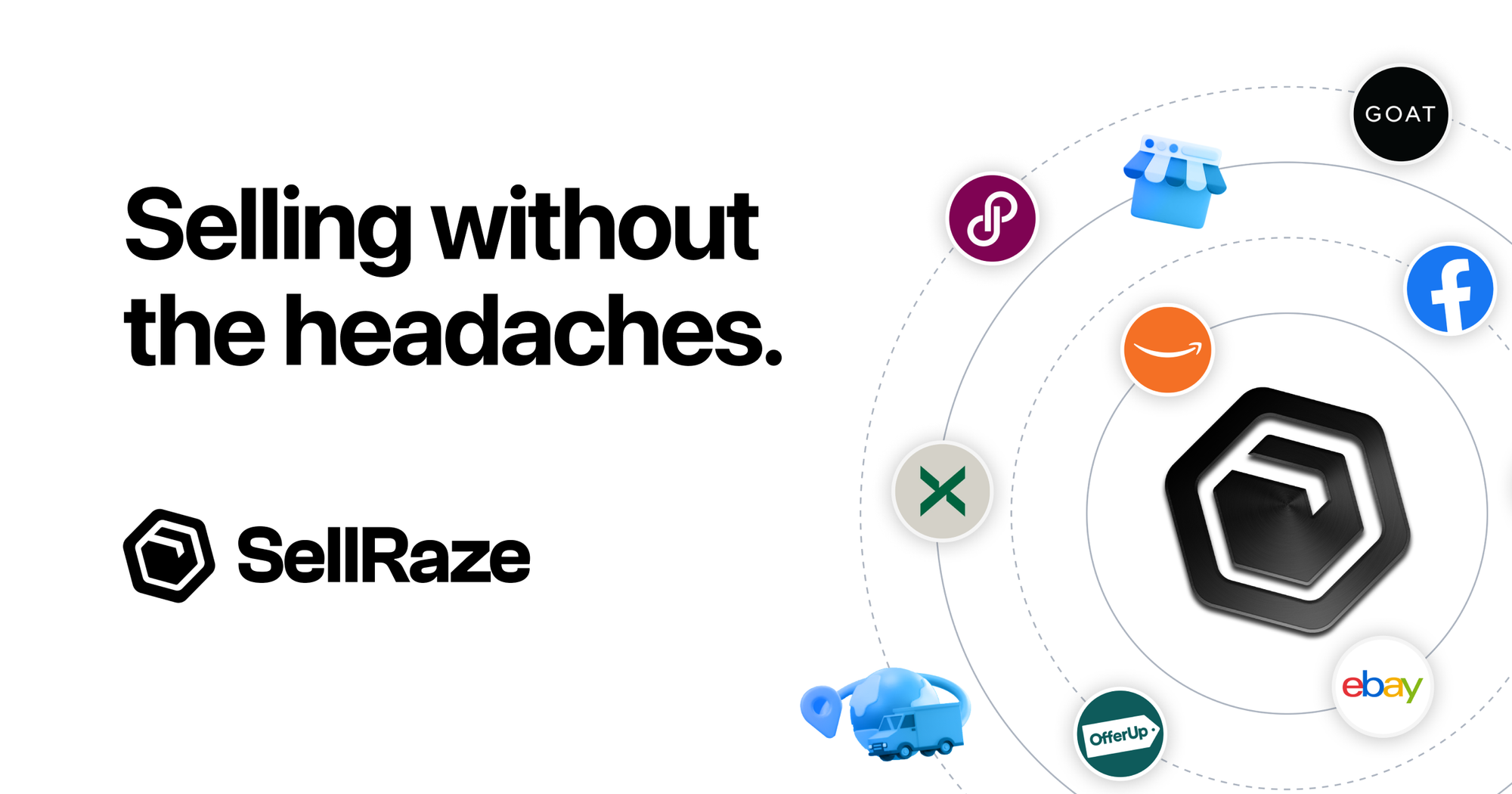
SellRaze is a modern, tech-forward mobile and web application designed to help independent merchants scale their e-commerce storefronts. It functions as a robust central command center for cross-listing and managing inventory across the web's biggest secondary style hubs.
The primary difference between SellRaze and StockX is structural framework. StockX acts as a standalone siloed marketplace that keeps your inventory trapped on their specific exchange, whereas SellRaze frees your inventory, pushing your items out to various public marketplaces simultaneously to maximize visibility.
Fee structure:
- Seller commission: 0% directly from SellRaze (you only pay the native fees of the external platform where your item sells).
- Payment processing: Dependent entirely on the marketplace processing your final sale.
- Shipping: Handled through the respective integrated marketplaces you cross-list onto.
Who it's best for: Active cross-channel e-commerce merchants, streetwear flippers, and clothing declutterers.
Pros:
- Prevents double-selling by automatically delisting sold items across your channels.
- Saves hours of manual work by replicating data across different retail platforms.
- Charges no platform sales commission on your hard-earned revenue.
Cons:
- Requires active external seller accounts on the individual linked platforms.
- Demands initial technical configuration to properly sync your online stores.
Unlike StockX, SellRaze gives you the freedom to test multiple sales channels without committing to a single marketplace's audience.
Quick Comparison
|
App |
Seller Fee |
Best For |
Audience |
Shipping |
|---|---|---|---|---|
|
StockX |
7% - 9% |
Deadstock sneaker flips |
Global Hype & Commodity Buyers |
Prepaid label paid by buyer |
|
GOAT |
9.5% - 25% |
Premium Sneaker Reselling |
Sneakerheads & Streetwear Fans |
Flat fee paid by buyer |
|
eBay |
2.5–15.3% |
Independent Store Control |
Broad Global Consumer Base |
Flexible / Arranged by Seller |
|
Grailed |
9% |
Streetwear & Designer Archive |
High-End Fashion Enthusiasts |
Grailed Labels or Self-Ship |
|
Whatnot |
8% |
Real-Time Live Volume |
Interactive Auction Shoppers |
Auto weight labels paid by buyer |
|
SellRaze |
0% |
Multi-Platform Cross-Listing |
Multi-Channel E-commerce Sellers |
Inherited from final sale platform |
The Bottom Line
Choosing the right reselling app comes down to what you are selling and how much control you want over your pricing. If you deal exclusively in high-end, rare sneakers and value an authenticated middleman, GOAT and eBay are your safest alternatives. For premium apparel and designer streetwear, Grailed offers an unmatched hyper-focused audience.
If you're selling across multiple platforms, managing listings on each one individually gets overwhelming fast. SellRaze lets you create listings with AI and crosslist across all your favorite marketplaces in seconds. It is well worth checking out if you want to save time, avoid manual data entry, and sell more inventory across the web.
Start optimizing your listings today.