Online Thrifting Has Completely Destroyed the Concept of a “Good Deal”
by Joem Castones •February 18, 2026

Let’s talk about how online thrifting absolutely wrecked our collective ability to understand money.
Because once upon a time, a good deal was simple. That’s the part we forget. A good deal didn’t sparkle. It was grounded. It made sense without needing a calculator. An $8 shirt was good because it was $8. You paid eight dollars. You left. End of story.
Now? An $8 shirt seems wrong, almost to the point of suspicion. Why so cheap? Something must be wrong with it. Two swipes later, and a $32 shirt feels incredible if it once had an absurd retail price attached to it. That’s a crossed-out $200. You screenshot it. Thirty-two bucks is completely reasonable now. You are saving money. A lot of imaginary dollars that were never in danger of leaving your bank account, but still you count. So you tap the cart.
At some point, online thrifting rewired our brains. It didn’t just change how we shop, but how we justify shopping. And worse, it trained us to confuse spending with winning. We think it’s such a wasted opportunity when a deal has no context. So it requires comparison. A number that makes the current price look like a steal by contrast.
And in turn, you feel clever, resourceful, and morally superior to people who pay full price. Here’s a mirror held up to our consumer habits, where discounts become entertainment and what we’re paying for is less important than what we’re allegedly saving. Where shopping turned into a game where the objective is not usefulness, but perceived victory.
And we are all playing.
How a Made-Up Number Took Over Your Brain
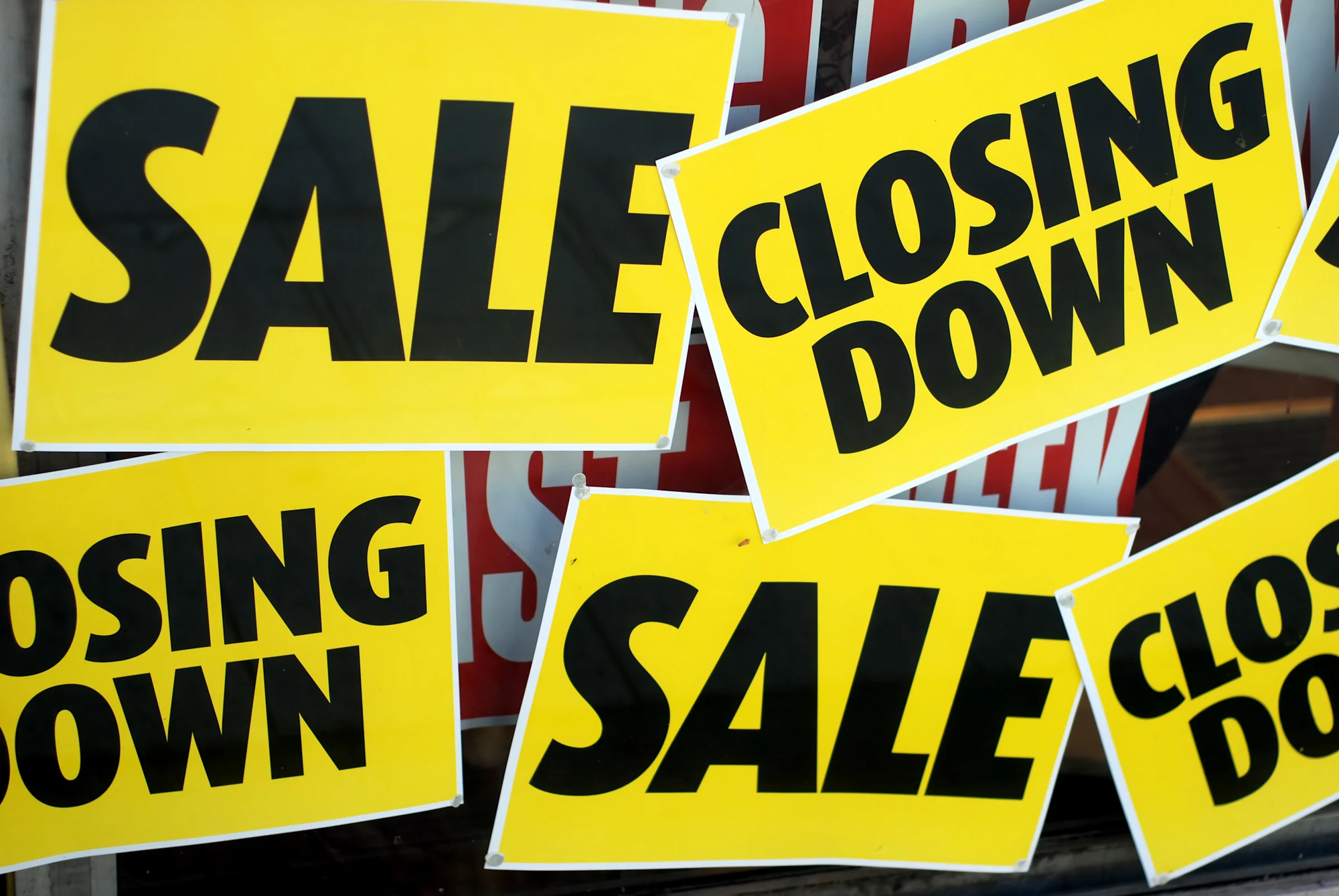
Original retail price used to be trivia. The fun fact you mentioned in passing. “Can you believe this was originally $200?” Then you moved on with your life.
Platforms took that number and made it the main character of the purchase. Now it is the hook. The justification. The reason the item exists at all. They know exactly where to put it. Big and bold, crossed out dramatically. The current price is there too, technically, but it’s smaller. Almost shy.
It reframes the entire transaction before you even look at the item. And your eyes go to the bigger number first. Always. Because that number does the emotional work for you.
This blazer is not just a mere blazer. It’s a survivor that narrowly escaped financial ruin. Once it lived a glamorous life at full price, waiting long since for the right customer. Now it has found you—a hero defeating capitalism one discounted blazer at a time. The higher the original price, the nobler your sacrifice.
A $32 shirt is fine by itself. It’s just a number. You might pause. You might ask yourself a question. Dangerous territory. But a $32 shirt that was originally $200 is a redemption arc. A moral victory over retail. That $8 shirt you skipped earlier has no such narrative. No former glory.
The problem is that original retail price is a deeply unserious metric.
Retail prices are not sacred truths. They are marketing decisions. They are inflated so brands can mark things down later and still feel generous. That $200 shirt likely spent most of its life not being $200. It was probably $149 during a sale. Then “extra 40% off” in another. Then it disappeared into an outlet before finally ending up online, where it now waits for someone to feel victorious buying it for $32.
But online thrifting freezes that number in amber and presents it as historical fact. And we fall for it every time. Besides, we get to feel adjacent to luxury without the consequences. We never ask how many people actually paid that price. We don’t care. The number exists, that much is enough.
Discount Math Is a Sport and We Are All Bad at It
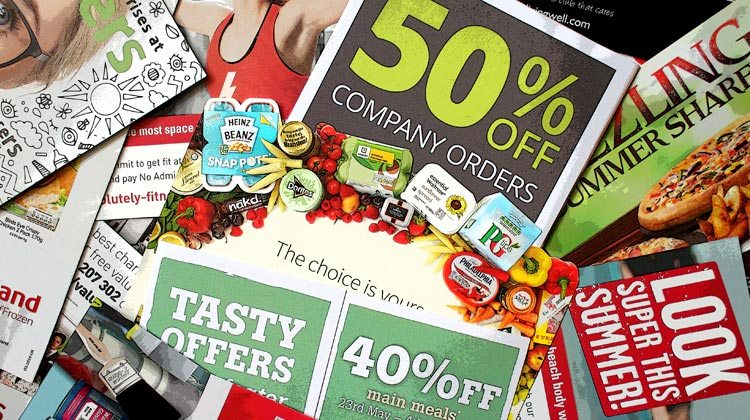
Online thrifting has turned discounts into a competition. The bigger the percentage off, the more victorious the purchase felt. It didn’t matter what the final price was. What mattered was how dramatic the markdown looked.
An $8 shirt has a discount of zero percent. Meh. But a $32 shirt that used to cost $200 has a discount that makes you short-circuit. Practically free. Now that’s a story you can tell.
Then your brain starts doing fake math. “I spent $32, saved $168,” we say, as if that money was ever in motion. But that $168 was never yours. It was never going to be spent. It did not exist in any practical sense. Stores know exactly what they’re doing. Discount math messes with your sense of scale. The more deals you stack, the more accomplished you feel. Five discounted items feel smarter than one full-price item, even if the total is higher.
Each item feels justified on its own. Look at the discount. Look at the savings. Look how smart you’re being. Because every purchase is a win, there’s no natural stopping point. You don’t stop when your needs are met. You stop when the deals stop looking impressive.
Which they never really do.
The Emotional Cost of Always Feeling Like You’re Winning

Here’s the part nobody really talks about. When everything is framed as a deal, nothing feels as valuable anymore. Online thrifting trains you to expect constant victory. Constant discounts. Constant proof that you are smarter than full-price shoppers.
This does strange things to your perception of value. Full price starts to feel insulting. Even fair prices feel negotiable. An $8 shirt feels overpriced if it doesn’t come with a dramatic markdown. What is it hiding? You stop trusting simplicity and start mistrusting yourself. If you buy something without a discount, it feels like you failed. Like you missed a chance to be clever.
This mindset does not stay confined to shopping. It leaks into reselling. Into pricing. Into how you value your own inventory. You hesitate to price things fairly because you worry buyers will want the illusion of a deal more than the item itself. You inflate prices just so you can slash them later. You start playing the same psychological games that trained you.
It leaks into everyday spending. You delay purchases you actually need because you’re waiting for a better deal. The bar keeps moving. Yesterday’s good deal becomes today’s baseline.
This is not a healthy relationship with money. A truly good deal should make sense immediately. It should not require justification or mental gymnastics. But that doesn’t trend well. So we keep scrolling. We keep chasing discounts. We keep congratulating ourselves for spending more than we planned because the original price made it feel virtuous.
The way out isn’t to stop shopping online or to swear off discounts forever. You just need to ask one deeply unexciting question every now and then. “Would I still buy this if it wasn’t on sale?”
If the answer is no, the deal might not be a deal at all.
Not sure you're getting the best deals? SellRaze keeps your inventory in sync and helps you track competitive pricing, so you never miss out on a sale. Start optimizing your listings today!