
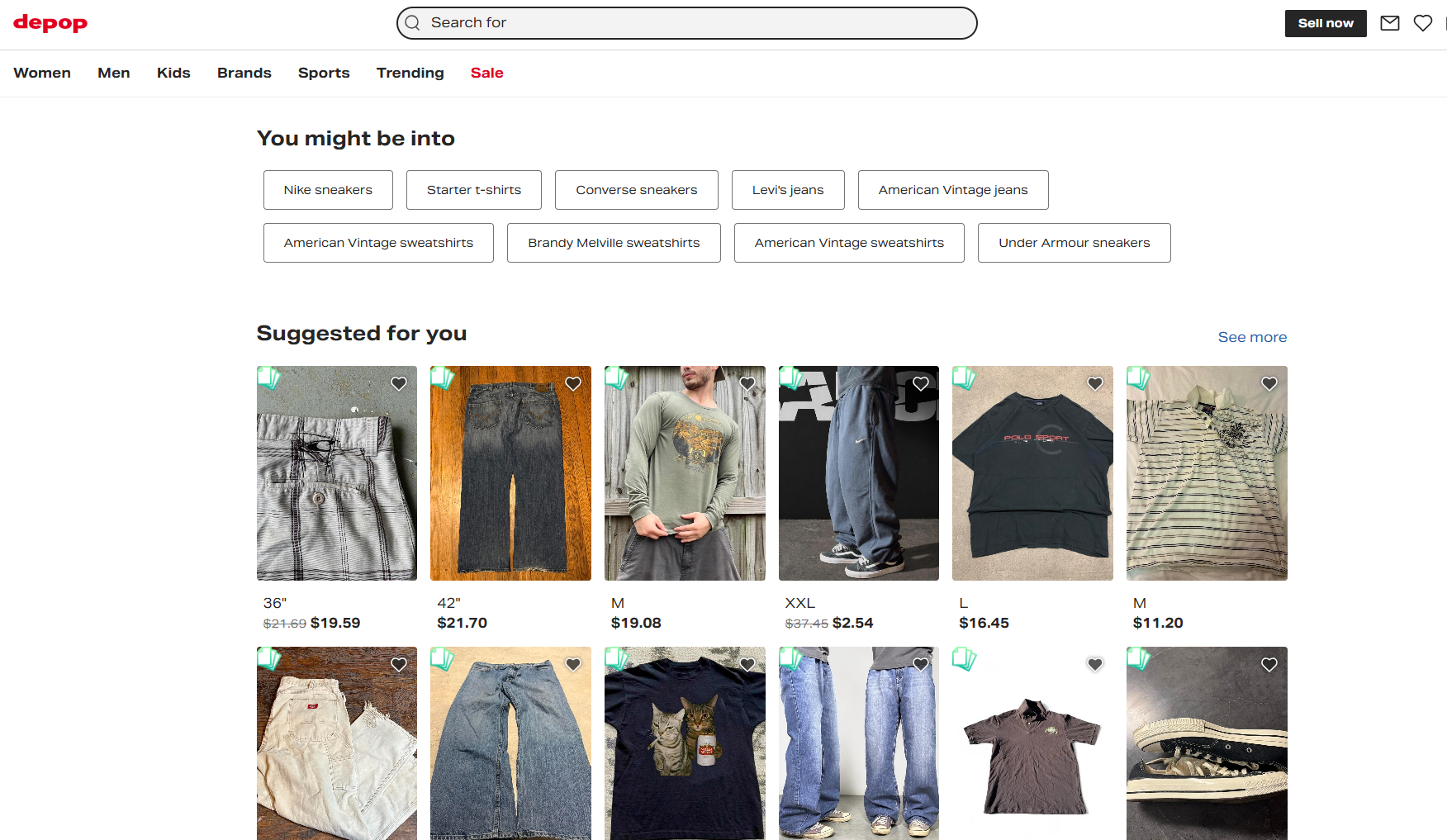
Depop and Whatnot both have a reputation for pulling in younger buyers who love secondhand fashion, which makes them easy to confuse at first glance. Spend a few minutes on each app, though, and the gap becomes obvious. Depop is a scrolling feed of styled photos where buyers browse closets and tap the pieces they like, while Whatnot is a live video platform where hosts sell items on camera and viewers bid in real time.
If clothing is your main inventory, both can make you money, but they reward very different skills. The comparison below looks at fees, buyers, workload, and payouts so you can figure out which one fits the way you like to sell.
At a Glance
|
Depop |
Whatnot |
|
|---|---|---|
|
Founded |
2011 |
2019 |
|
Users |
Tens of millions of registered users |
650,000+ new users joining weekly in 2026 |
|
Seller fees |
0% selling fee + 3.3% + $0.45 processing |
8% commission + 2.9% + $0.30 processing |
|
Best for |
Vintage, Y2K, streetwear, one-of-a-kind pieces |
Trading cards, sneakers, collectibles, bulk clothing |
|
Target audience |
Gen Z and trend-focused shoppers |
Collectors and live shopping fans |
|
Shipping |
Depop labels or your own shipping |
Prepaid labels, buyer-paid shipping |
|
Payout speed |
About 2 business days after delivery |
About 4 hours after delivery |
Fees
Depop dropped its selling commission for US sellers in 2024, and it has been one of the cheapest places to sell clothing ever since. Whatnot still takes a commission, and it adds a processing fee on top.
Depop fees:
- 0% selling fee for US sellers
- 3.3% + $0.45 payment processing on the total transaction
Whatnot fees:
- 8% commission on the item price
- 2.9% + $0.30 payment processing on the full order, including shipping and tax
The gap between the two grows as your prices climb, since Whatnot's 8% commission scales with the sale while Depop only charges processing. Whatnot does soften the blow for high-dollar collectibles, with the commission dropping to 0% on the portion of a sale above $1,500 in select categories, but that perk rarely comes into play for everyday clothing.
Take a $50 sale with $6.99 in buyer-paid shipping.
Depop:
$50 → minus processing on $56.99 (~$2.33)
Take-home ~$47.67
Whatnot:
$50 → minus 8% commission ($4.00) → minus processing on $56.99 (~$1.95)
Take-home ~$44.05
Winner: Depop. You keep several dollars more per sale, and the savings add up fast over a month of steady orders.
Audience & Buyer Demographics
Depop's buyers skew young, and they shop by vibe. A lot of them are teens and people in their twenties who follow specific aesthetics, like 90s streetwear or Y2K, and they discover sellers by scrolling through feeds and search results. Good styling can sell an item to someone who wasn't looking for it, which is a big part of the app's appeal.
Whatnot built its early audience around collectors of cards and sports memorabilia, and that crowd is still a big part of the platform. Fashion has grown quickly, though, and it became Whatnot's largest category by order volume in 2026. The buyers who show up for clothing streams tend to enjoy the fast pace of an auction and the chance to snag a piece for less than it would cost in a regular listing.
Winner: Depop, if you sell clothing. Its audience is built around fashion discovery, while Whatnot's fashion shoppers share the app with a large collector base.
Selling Experience

Depop runs a lot like a social media account. Your photos carry a lot of weight, so sellers put effort into flat lays, modeled shots, and a consistent look across their closet. You also spend time refreshing listings to keep them near the top of search, following other users, and answering messages from buyers who want to negotiate. It takes work, but you can do it on your own time, one listing at a time.
Whatnot compresses the work into live shows. Instead of polishing individual listings, you prepare a batch of items, go live, and sell them one after another while chatting with viewers. A single evening can move a lot of inventory, which is great for bulk clothing sellers. The trade-off is that you need to be on camera, keep the energy up for the length of the show, and build an audience from scratch, which can take weeks before streams pick up.
Winner: Depop. Working at your own pace is a lot easier to fit around a job or school than committing to regular live shows.
What Sells Best
On Depop, unique pieces get the strongest reaction. Vintage band tees, Y2K tops, reworked clothing, and small-brand streetwear all do well, along with recognizable names like Nike, Levi's, and Carhartt. Buyers there value finding something nobody else is wearing, so one-of-a-kind items tend to fetch better prices than basics.
Whatnot favors items that spark competition. Trading cards, sealed packs, and sneakers can draw heated bidding, and collectors will push prices up when several people want the same thing. Clothing sellers on Whatnot often run bulk shows with low starting bids, moving large amounts of inventory quickly instead of holding out for top dollar on each piece.
Winner: Tie. Depop is the stronger choice for standout fashion pieces, and Whatnot is stronger for collectibles and high-volume clothing lots.
Seller Support & Protection
Depop handles disputes through Depop Payments. If a buyer says an item didn't arrive or doesn't match the listing, they can open a case, and Depop reviews it. Having tracking on your shipments protects you against many unauthorized chargebacks, though disputes can take a while to settle, and your funds may stay on hold until they do.
Whatnot routes problems through its support team, and buyers can report items that arrive damaged or different from what they saw on stream. Whatnot doesn't authenticate items before a sale, so buyers are expected to check what they receive, which can create more disputes on expensive pieces. Showing items clearly on camera and calling out flaws during the show goes a long way toward protecting you.
Winner: Tie. Both platforms rely on case reviews rather than a firm cutoff for when a sale becomes final, so clear photos and honest descriptions are your best protection on either one.
Payout Speed

Whatnot is hard to beat here. US sellers see their earnings about four hours after the carrier confirms delivery, and bank transfers arrive in one to two business days after you request them. Eligible sellers in the Early Payout program can access their money as soon as they print the shipping label.
Depop pays out a couple of business days after tracking shows the item as delivered, as long as you ship with a Depop label or add tracking yourself. Skipping tracking pushes the payout back much further, so it's worth using tracked shipping on every order.
Winner: Whatnot. A few hours after delivery is faster than a couple of business days, and the Early Payout option speeds things up even more.
Depop vs Whatnot: The Verdict
Use Depop if you sell curated fashion and want to keep as much of each sale as possible. The lack of a selling fee gives it an edge on profit, and the style-focused audience rewards sellers who put effort into their photos and their closet's look. Use Whatnot if you'd rather sell in bulk, enjoy being on camera, or deal in collectibles and sneakers. Fast payouts and the energy of live auctions can clear inventory quicker than waiting for buyers to find individual listings.
Plenty of resellers use both, keeping their best standalone pieces on Depop and saving bulk lots for Whatnot shows. If you already have a Depop closet full of listings, you don't need to start over to grow onto other marketplaces. SellRaze can import your existing Depop listings and send them out to your other platforms in seconds, so the work you already put into photos and descriptions keeps paying off in more places.
Optimize your listings today!