

You can spend three hours combing through a thrift store, fill a cart with items that seem promising, drive home with a trunk full of potential inventory, and end the day without listing a single thing. By any measure that involves the real business of reselling, nothing got accomplished. No photos were taken. No descriptions were written. No item moved a single step closer to a buyer. And yet the drive home carries the same satisfaction as a genuinely productive day, the kind usually reserved for finishing a task that had a deadline attached to it.
This isn't a flaw in judgment so much as a predictable result of how sourcing works on a psychological level. Thrifting mirrors the structure of real accomplishment closely enough that the brain registers it as one, even before the part of the job that generates income has started.
The Hunt Does More Work Than It Looks Like

Walking a thrift store aisle requires constant, rapid evaluation. Every item on a rack gets a quick judgment: worth checking, not worth checking, worth a closer look at the tag, worth flipping over to check for stains or damage. That process happens dozens of times a minute across an entire visit, and it draws on the same pattern-recognition skills that make sourcing genuinely difficult to do well. Spotting a well-made brand hiding on a rack of fast fashion takes a trained eye. Noticing a fabric that photographs better than average takes experience. Recognizing a silhouette that's trending again after years of being ignored takes memory built up over dozens of past sales. None of that is passive.
This kind of expertise gets exercised in full during a sourcing trip, and using a skill well produces satisfaction on its own, separate from whatever the skill eventually earns. Musicians get this after a strong practice session with no audience present. Cooks get it after prepping ingredients well before the meal is even plated. Sourcing rewards the same part of the brain, and the reward arrives immediately, while listing and selling stay somewhere down the road.
A Haul is Physical Proof, and Proof Reads as Progress

There's a difference between believing progress happened and being able to see it. A pile of unlisted clothes sitting on a bed is tangible in a way that a mental note to list them later isn't. The eye reads volume as accomplishment, regardless of what stage that volume is in. A full trunk, a stack of bags, a rack bending slightly under new weight, all of it registers as evidence of a good day before a single item has generated a cent.
This is part of why so many resellers end up with inventory piles that outpace their listing speed by a wide margin. The haul delivers a reward the moment it gets collected. Listing delivers a reward much later, and only after a slower, less exciting process of measuring, photographing, and writing descriptions that don't carry the same rush a good find does when it's pulled off a rack.
Sourcing is Easier Than the Parts That Come After it
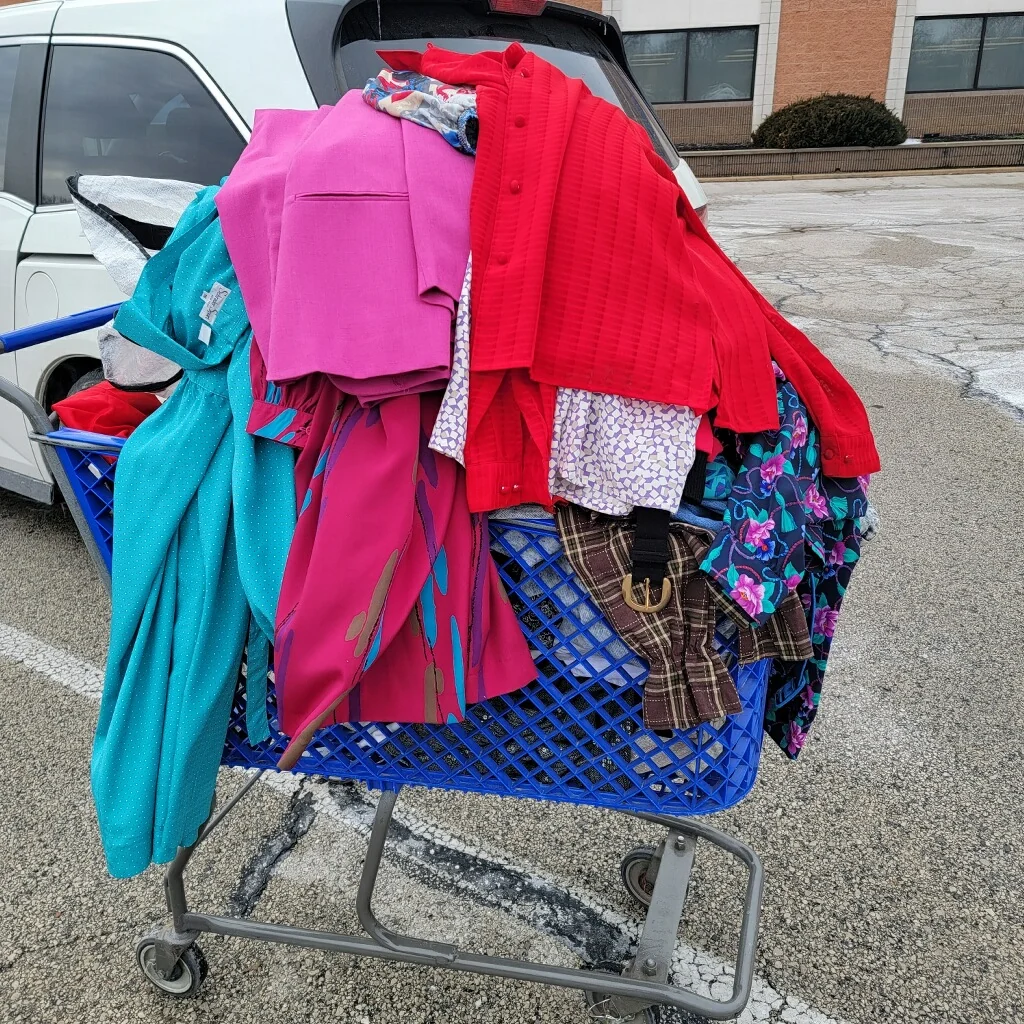
Digging through racks is physical and reactive. A good item either shows up or it doesn't, and either way, the activity keeps moving. Listing is the opposite. It requires sitting still, thinking carefully about wording, comparing prices across platforms, and making a dozen small decisions that don't come with the same instant payoff a good find does. Between a task that's active and rewarding and a task that's slower and more tedious, most people gravitate toward the one that rewards them sooner, even when the tedious task is the one that generates the money.
This isn't laziness. It's a normal response to two tasks built on very different reward schedules, one designed around quick wins and the other designed around delayed ones. Sourcing offers a small hit of satisfaction every few minutes. Listing offers one much later, after a chunk of unglamorous work has already been done.
Why the Brain Doesn't Wait for the Sale to Reward the Search

Some of this comes down to how reward systems in the brain respond to search and discovery rather than to completion. Foraging behavior across species tends to trigger satisfaction at the moment of finding something valuable, not at the moment that value gets used or exchanged. A person digging through a clearance rack is running a version of the same loop that made searching for food a rewarding activity long before money or marketplaces existed. The reward was never designed to wait for a transaction. It was designed to encourage more searching.
This explains why the high of a good sourcing trip can rival, and sometimes outweigh, the satisfaction of an actual sale. A sale confirms that a decision was correct. A great find generates that confirmation on the spot, the moment an item gets flipped over and the tag turns out to be exactly the brand a buyer has been hunting for. Selling later just adds a second, smaller reward on top of one that already landed hours earlier in the middle of a store.
When the Pattern Becomes a Problem

None of this means sourcing trips are wasted time. Inventory has to come from somewhere, and building a habit of regular sourcing keeps a shop stocked with fresh items instead of the same handful of listings sitting untouched for months. The trouble starts when sourcing becomes a way to avoid listing altogether, when the reward built into the hunt gets used as a substitute for the slower work that turns a hunt into a sale.
A closet full of unlisted inventory isn't a sign of a bad eye for finds. It's usually a sign that the reward structure of the hobby keeps pulling attention toward the part that pays off quickly and away from the part that pays the bills. Recognizing that pattern is often enough to interrupt it. Setting a rule that nothing new gets sourced until the current backlog shrinks by a meaningful amount forces the slower task back into the rotation. Treating a sourcing trip as unfinished until the haul gets photographed, even roughly, closes the gap between the enjoyable part and the necessary part instead of letting the two drift further apart.
Some resellers solve this by capping sourcing trips to once a week and pairing every trip with a listing session scheduled for the following day, before the next hunt is allowed to happen. Others track backlog size directly, treating a rack that's grown past a set number of unlisted items as a signal to stop sourcing until it shrinks back down. Neither approach requires giving up the trips themselves. Both simply attach a condition to when the next one is allowed to happen.
Why the Reward Isn't Worth Fighting Entirely

There's a case for leaving some of this pattern alone rather than trying to override it completely. The satisfaction that comes from a good sourcing trip is part of what keeps resellers doing this work in the first place, especially during stretches when sales are slow or the market is unpredictable. A hobby or business that offers no enjoyment along the way rarely survives long enough to become sustainable. The goal isn't eliminating the rush of a good find. It's making sure that rush doesn't slide in unnoticed as a replacement for the steps that turn a good find into a good sale.
Thrifting will always carry its own reward, separate from whatever happens after the trunk gets unloaded. Understanding why that reward shows up so early, and why it doesn't automatically extend to the listing process, makes it easier to enjoy the hunt without letting it stand in for the work still waiting at home. The trip was never the problem. The trouble only starts when the trip becomes the whole plan.
Not sure you're getting the best deals? SellRaze keeps your inventory in sync and helps you track competitive pricing, so you never miss out on a sale. Start optimizing your listings today!