Vintage vs Thrifted: A Guide to Secondhand Pieces
by Jasmin Mipaña •December 16, 2025
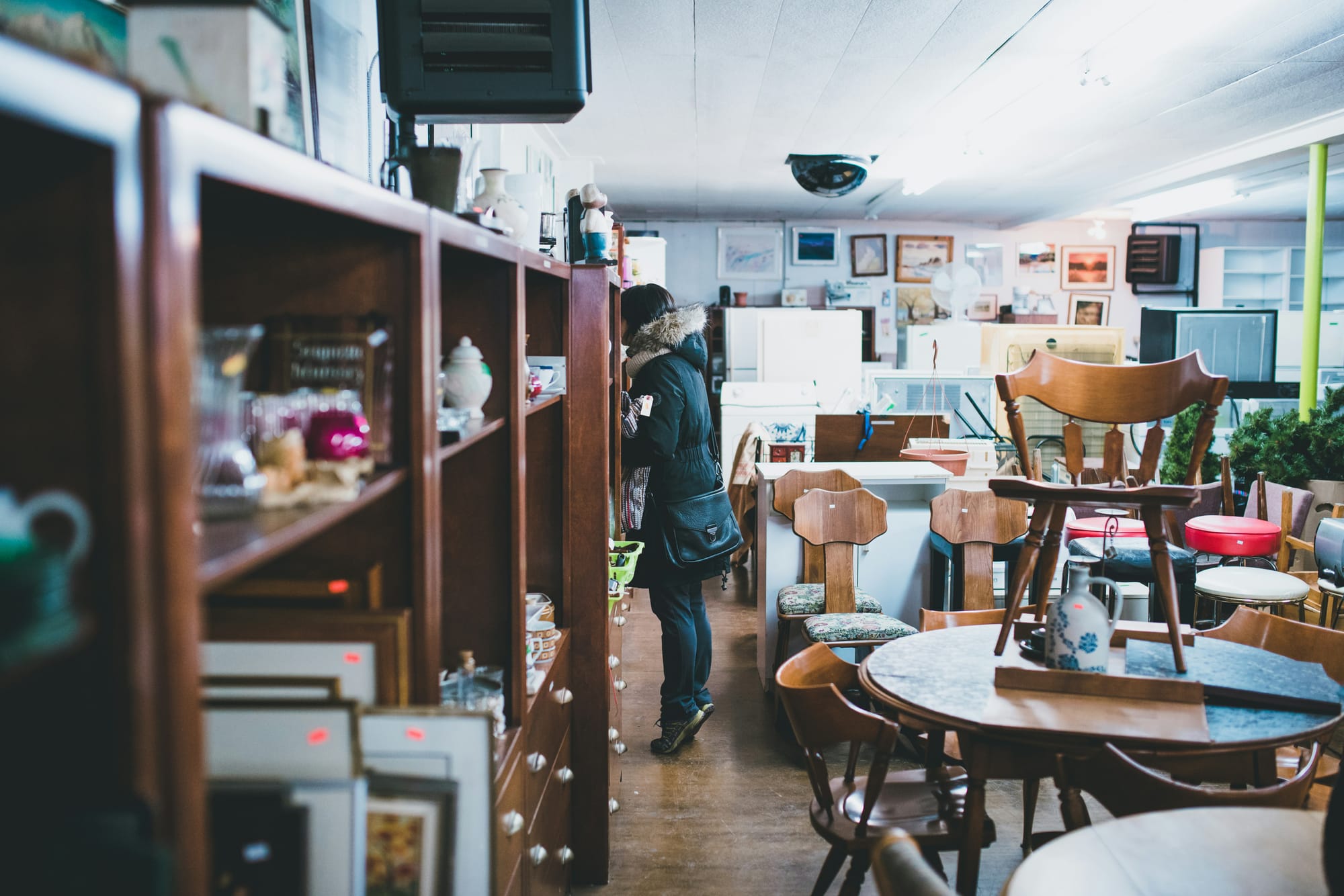
Which is which? We give you the details for each.
The holiday season is in full blast, and with inflation rising up to 3% last September 2025, you might have considered getting thrifted gifts for your family and friends. You are not alone: 66% of shoppers who are open to giving secondhand gifts, a figure that increases with Millennial shoppers.
Thrifting is no longer a frowned-upon activity; it’s even considered cool by GenZs. But with the novelty comes the confusion:likely you have heard the words thrifted and vintage often get interchanged. It can be confusing to someone who just started buying not-new stuff.
We give you the details for each kind of secondhand items-from where these items are sourced, to how old actually these items are-and everything in between.
Why knowing the difference matters
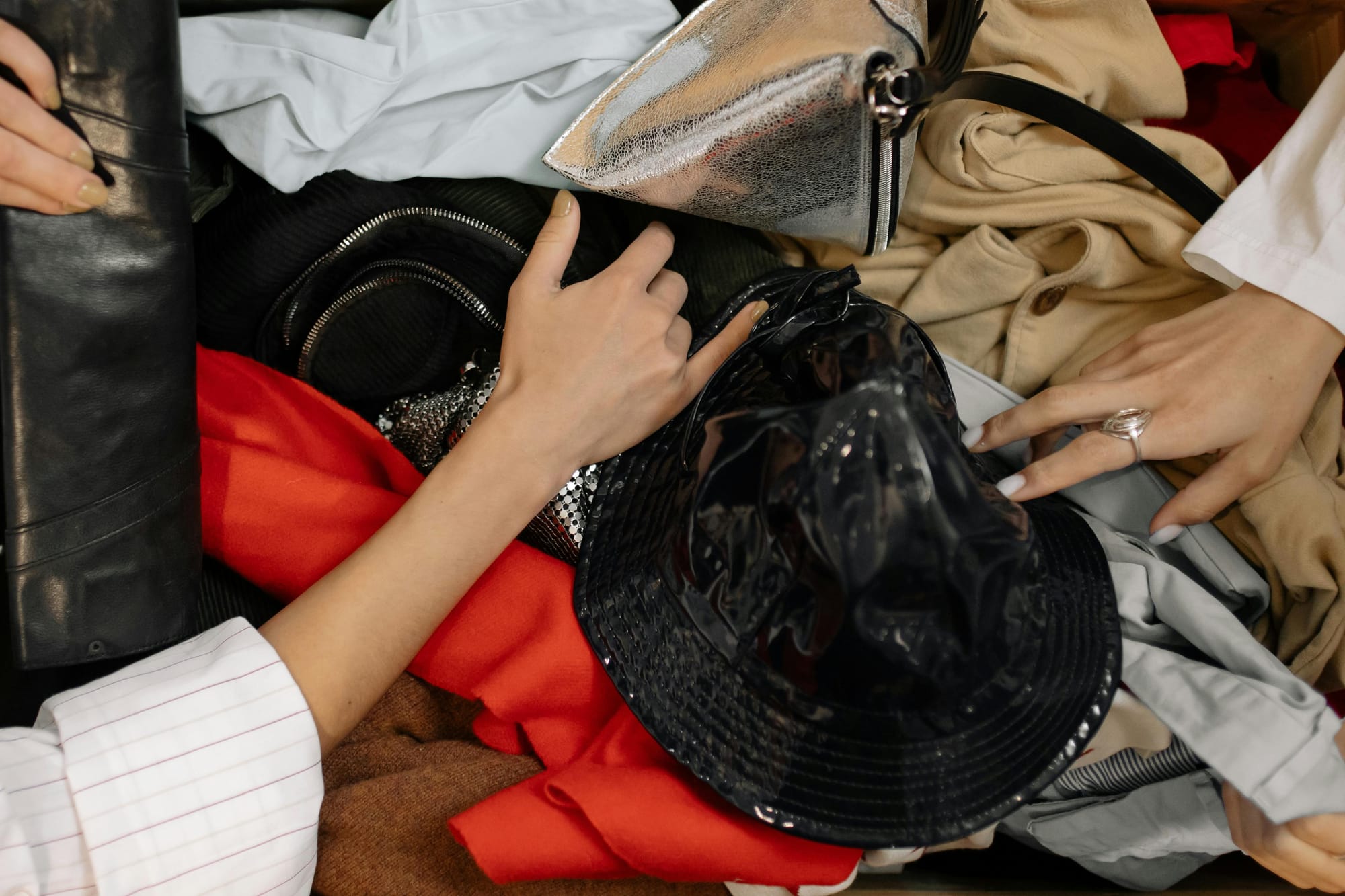
Nicole Chin, also known as chinchilla.village on TikTok, acknowledges that the words “thrifted” and “vintage” gets thrown around interchangeably and there’s a confusion surrounding these two things.
It’s a must that you know the difference between the two. When scanning racks and racks of used clothing or scouring stuff like books and knick-knacks, you can’t simply declare an item is “vintage” if you don’t have proof. A 70s print shirt, however old it looks, isn’t vintage when it’s made in 2023. A toy set in an unopened box cannot be considered brand-new because it already had a previous owner who simply didn’t like it and donated it
As a buyer and gift-giver, knowing the difference between the two shows your credibility to the people you give stuff to.
Different labels, different expectations
Thrifted and vintage are labels we hear a lot, but defining them helps us manage our expectations with the condition, the appearance, and the price of each. Both are under secondhand purchases, and both help minimize waste. Hence, these two are more eco-friendly than fast fashion.
Chin also shares that she considers stores that sell items $15 and below thrift shops; any higher would just be secondhand stores selling designer and premium items.
Why these terms get mixed up
- The dawn of online resellers: With online resellers describing “vintage” on their listings, “thrifted” and “vintage” are often used in place of another. An old sweater that was once your grandfather’s can easily be sold as vintage, though it was mass-manufactured in a factory. They use the word as clickbait for online shoppers.
- Marketing tactic: Even fast-fashion companies (sorry Shein) label their items in physical stores as vintage when it could not have been a few months old since it was produced. Only the style of a certain era was copied.
- True vintage items aren't given the attention they deserve: More often than not, newbie thrift shoppers will skip a bin at the back of a thrift store where real items from several decades await.
What do these terms really mean?
Thrifted, explained
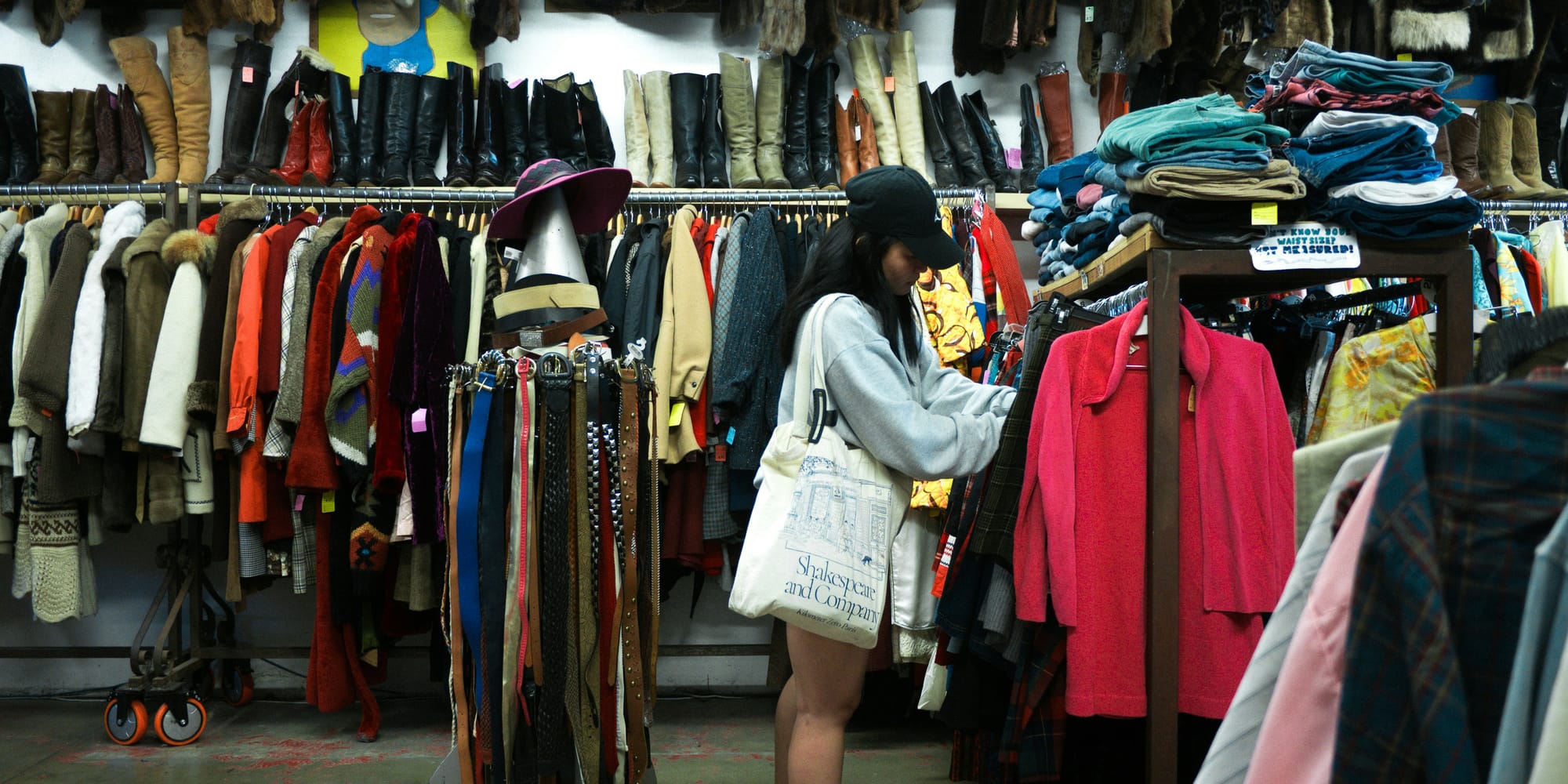
From a thrifter’s standpoint, thrifted means anything brought from a thrift shop. Clothes, shoes, bags and accessories are common items, but so are kitchen and home furniture, books, toys and other belongings.
Thrifted is the umbrella term for anything that’s not brand-new. These are just items put up for the sole purpose of reselling. With that, you’ll find out thrifted is a wide category-you might find an item that’s practically brand-new, unused, in its box. However, it is not technically brand-new, since someone previously owned the item!
You’ll also find items with signs of wear and tear, it might be even be second-hand; you might be it’s third or fourth owner if you decide to buy it.
As for the price, thrifted is often equated to cheap secondhand items. This is not always the case; thrift stores typically get their items from donations, and some people donate items that are expensive.
Thrifting is a fulfilling experience, especially when you get to find one-of-a kind pieces. It’s not for the fain-hearted, though; scouring through thrift shops can be dusty, dirty, and overwhelming, plus it takes patience to find something that fits your style and needs. Unlike in a store that sells new stuff where you’ll just get what you want, thrifting involves going through many items.
Related reading: Would you buy it if it were in a department store?
Vintage, defined
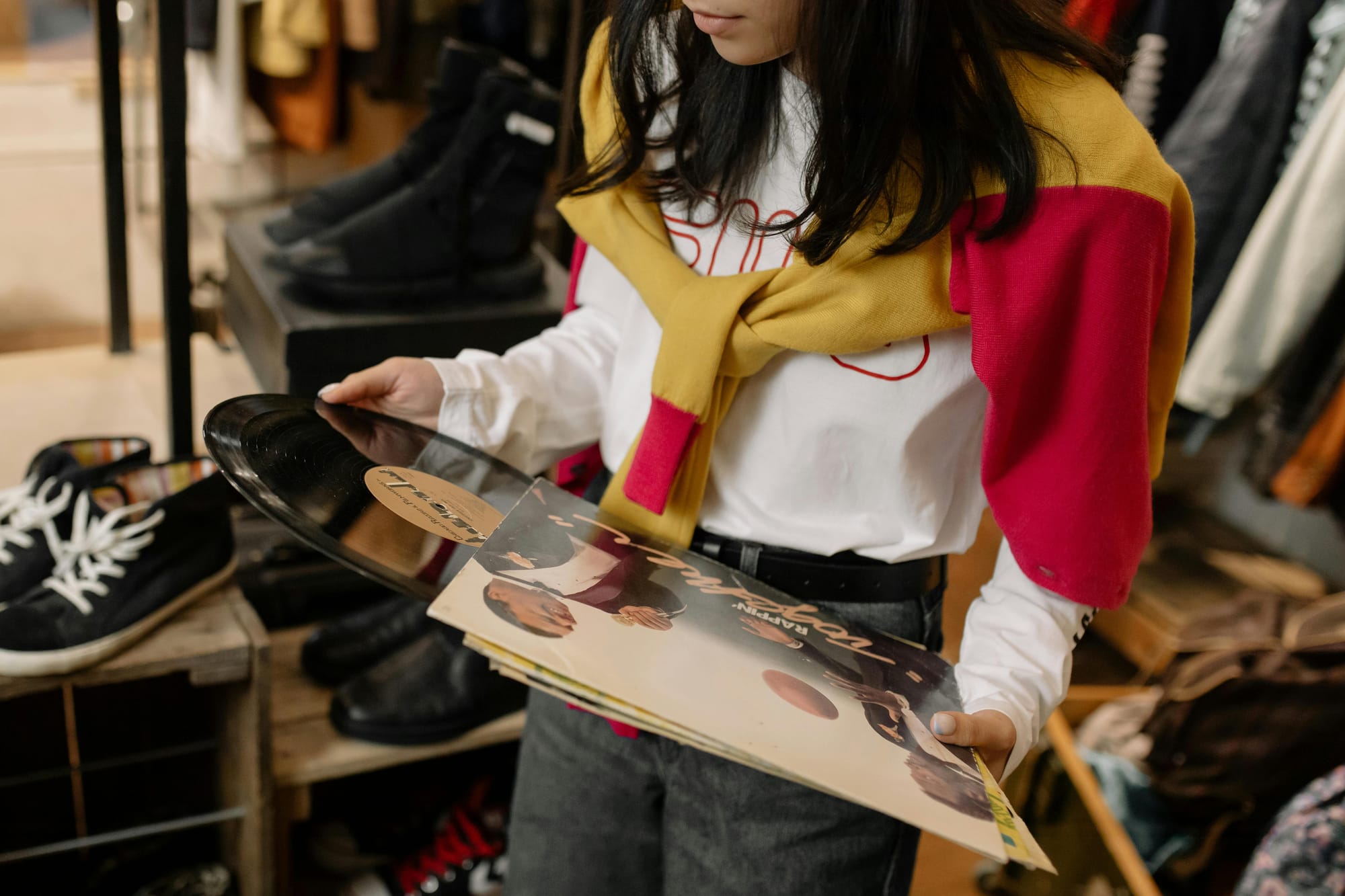
Vintage are items that are not new and belong to the past (think: a 1920s flapper dress or a 1942 vinyl). For an item to be called vintage, it has to be at least 20 years old or more.
True vintage items have survived the wear and tear that comes with time. They may be made from materials that are rarely produced nowadays (like hand-woven silk), or sewn using a patented stitching method from a few decades ago. Vintage items are no longer made today.
This is what makes vintage items highly valued:
- They are old and comes with a story (like a label that marked a company’s transition)
- They might have famous previous owners (and got autographed)
- They are now one of a kind because they’re not produced anymore
Vintage items often have a different feel and quality that’s hard to replicate, especially when compared to today’s mass-manufactured items. But be wary: old items does not immediately equal to vintage. Case in point: items from 2000 onward.
In contrast to thrift stores, Chin mentions that vintage stores curate clothing from different eras, usually before the 2000s. Like thrifted items, vintage can also be unworn/unused but cannot be called brand-new, as someone previously owned it, plus, it’s old.
It’s not vintage if:
- It’s made to look old through distressing techniques
- It’s style is vintage, but the materials are new (vintage-inspired is the more appropriate term)
Price-wise, vintage items are a little higher since these items are considered rare. Labelling items “vintage” even if it’s merely vintage inspired became a marketing strategy especially for resellers using platforms like Depop, Poshmark and Mercari. This misleading trick is also used by physical sellers to sell items for a higher price. The good thing is, crosslisting helps to eliminate such fake “vintage” descriptions as items are compared to similar ones.
Sellraze helps with crosslisting in multiple platforms. Find out more
Thrifted and vintage at a glance
It’s possible to find vintage items while thrifting, and it’s also possible to find thrifted items in a vintage store.
We’ve come up with a table that compares thrifted and vintage for you.
How to wisely shop for secondhand items
| Category | Thrifted | Vintage |
|---|---|---|
| Quality | Varies; can be excellent or poor. | Ranges from well-made quality to artisan-level. |
| Price | Generally priced lower depending on condition. | Priced higher, but can sometimes be found cheap at thrift stores. |
| Material | Ranges from synthetic materials to more durable ones. | Made from high-quality materials like silk, leather, etc. |
| Uniqueness | Depends—some items are mass-produced, others are rare. | Unique, limited-edition pieces. |
| Condition | May have stains or damage, though some are like new. | Older but well-maintained. |
| Availability | Easy to find and buy. | Found in curated shops. |
Technically, both thrifted and vintage are secondhand items. Here’s how to make the most of both:
- Know your brands: This tip works for clothing, accessories, furniture, kitchen items and other stuff. Check for established brands that produce good-quality new items. Secondhand items from the same brand are likely to survive the endless picking, examining and handling in a thrift store.
- Quality, quality, quality: Some items have lost their tags and labels along the way or got erased by everyday wear. See if the quality is excellent. Take a look at the craftsmanship-does it looks like it was mass-produced?
- Buy only what you need: We discourage hoarding and encourage donating. Do not be fooled by the lower price as to buy stuff that you won’t get to use, anyway.
Related reading: Six items you should never buy at the thrift store
The Bottomline
When buying secondhand items, it’s good to remember that thrifted and vintage are labels that may get confused for each other-but that’s what they are, just labels. What’s important is that you get the item that’s best suited for your needs, and you’re helping the environment whether you shop thrifted or vintage items.
For resellers, there’s always SellRaze to help you with fuss-free selling in multiple platforms. Our AI-powered listing lets you generate descriptions in a breeze. Plus, it’s Google Lens-like features lets you compare items and their average price and sell-through rate-perfect for supporting your business. Sell with ease, sell with SellRaze.