
The Card in the Binder Isn't Worth What You Think. Or It's Worth Much More.
by Eric Emmanuel Corrales •September 22, 2026
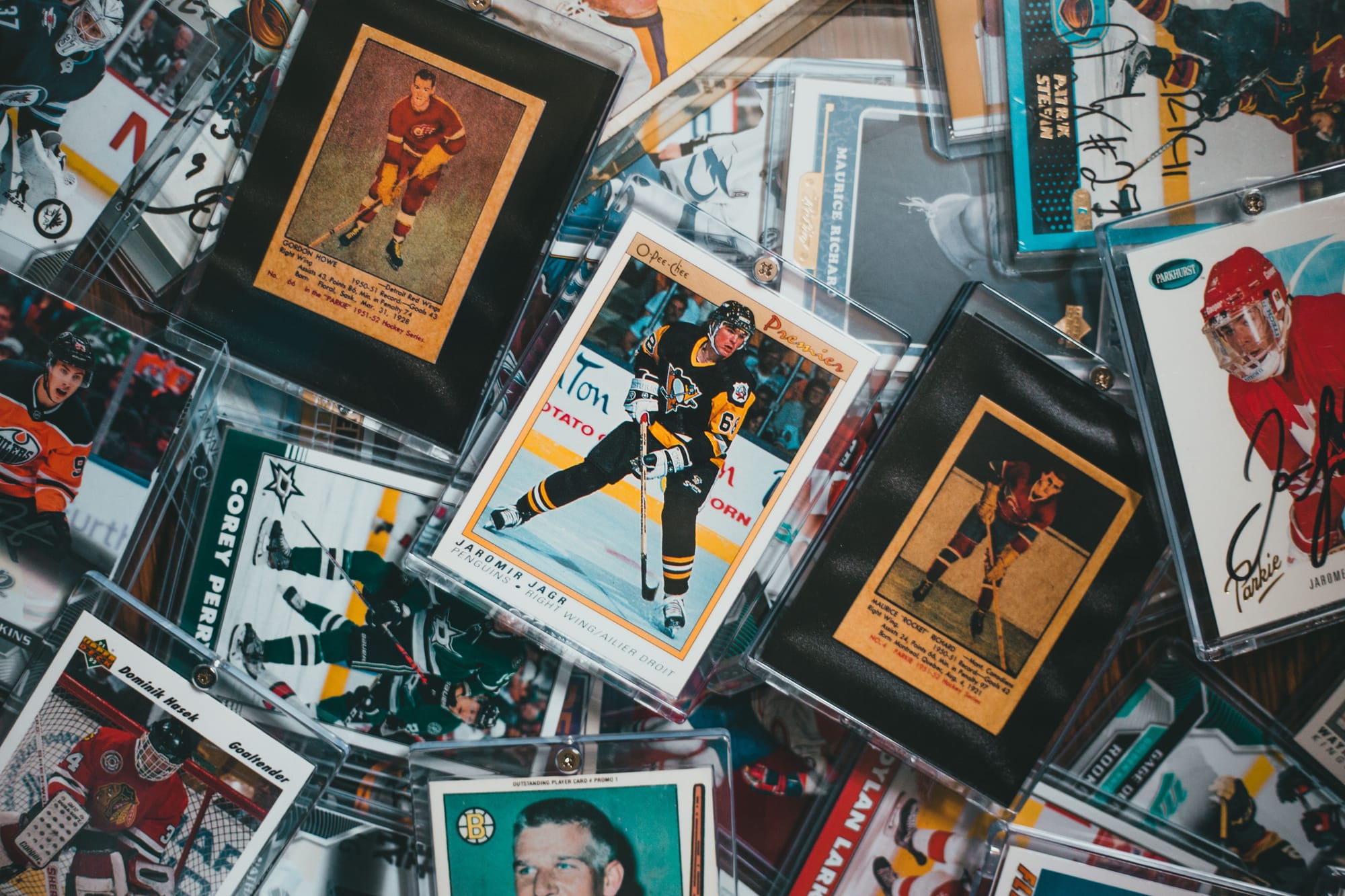
Trading cards to resell sit at an interesting intersection: a category with some of the most liquid, price-transparent markets in all of reselling, and one of the most unforgiving learning curves for people who don't understand how condition, grading, and population reports interact. The same Pokémon card can be worth $20 raw and $200 in a PSA 10 slab—or worth $4 after grading fees if it came back a PSA 7.
This guide covers trading cards to resell in 2026 with real numbers: which card categories are actively moving, how grading actually affects value, where to source underpriced cards, and how to calculate whether a flip actually makes sense before you spend money on it.
The Five Active Trading Card Categories in 2026
Trading cards to resell aren't one market—they're five distinct markets that overlap in collector culture but operate with different demand drivers, different buyer pools, and different resale dynamics.
Sports cards. The largest and most liquid trading card resell market. Baseball, basketball, football, and hockey cards are the traditional pillars, with rookie cards driving most of the value—particularly first-year cards of players who go on to significant careers. Cooper Flagg's rookie cards in 2025-26 Topps Basketball, the first Topps NBA flagship since 2009, are a current high-interest target. Sports cards trade actively on eBay's trading card marketplace and on StockX's trading card category, where verified graded cards trade with the same bid/ask transparency as sneakers.
Pokémon TCG. The most culturally active trading card market among younger collectors and the most price-transparent non-sports category. Base Set 1st Edition Shadowless Charizard remains the number one grading target, with PSA 10 copies selling for $300,000+. Modern Alt Art chase cards like Umbreon VMAX and Iono SAR offer strong PSA 10 ROI with lower entry costs. Pokémon's 30th Anniversary celebration products throughout 2026 are driving significant new collector interest and secondary market activity.
Magic: The Gathering. The oldest major TCG with a deep collector and competitive player market. Older reserved list cards—Cards from Alpha, Beta, Unlimited, and early sets that Wizards of the Coast has committed never to reprint—hold value like collectibles rather than game pieces. Modern staples fluctuate with competitive meta shifts, making them more volatile trading cards to resell than vintage cards.
One Piece TCG. A newer but rapidly growing market. One Piece card prices have been volatile in both directions—explosive price spikes on key cards followed by corrections as supply catches up. High-risk, potentially high-reward for sellers who track the meta and IP developments closely.
Emerging TCGs. Newer TCGs including Riftbound (League of Legends), Gundam, and Lorcana are active categories in 2026. These carry more speculation risk than established categories because there's less historical price data and demand can be more trend-dependent.
How Grading Changes the Math on Trading Cards to Resell
Understanding grading is non-negotiable for anyone serious about trading cards to resell. The value gap between a raw (ungraded) card and a graded one can be enormous—or grading can destroy your margin entirely if you submit the wrong card.
A raw card might be worth $20. The same card in a PSA 10 can sell for $200 or more. The difference is trust. PSA gives buyers a clear, third-party grade that proves condition and protects the card.
PSA (Professional Sports Authenticator) is the dominant grading service for most categories. PSA grading fees range from $20 (Value tier, 65 business days) to $300+ (Super Express, 2–3 business days) per card, plus $15–25 return shipping per submission. A PSA 10—labeled Gem Mint—is the highest grade PSA awards and represents a card with near-perfect centering, sharp corners, clean edges, and a flawless surface. Approximately 10% of submitted cards earn PSA 10.
The grading math works like this: if a card is worth $40 raw and a PSA 10 of that card sells for $200, grading at the $20 Value tier costs $20–45 in fees and produces a significant profit if the card grades well. If the same card grades PSA 8—which sells for $50—you've spent money to net a few dollars above raw value. As a rule of thumb, a modern card needs to be worth $40+ raw or likely to sell for $80+ in a PSA 10. Under that threshold, the grading fee eats the profit margin.
To achieve a positive PSA grading ROI in 2026, modern rookies must have a raw market value of $200 to $250 and a near-flawless surface. The PSA Regular tier break-even threshold has shifted permanently—submitting any card with a post-grade value under $150 guarantees a net financial loss.
BGS (Beckett Grading Services) and CGC are PSA's main competitors. PSA dominates the Pokémon market—most Pokémon collectors prefer PSA slabs, and PSA 10s command higher premiums. CGC is gaining ground as a viable alternative. For sports cards, BGS Black Labels (their equivalent of a perfect PSA 10) carry significant premiums on select cards.
Population Reports: The Research Tool Most Sellers Skip
A population report (pop report) is a public database maintained by each grading company that shows how many copies of a specific card exist at every grade level. A lower population at PSA 10 generally means higher scarcity and higher value. Checking pop reports before submitting or purchasing graded cards is one of the most useful habits any serious collector can develop.
Focus on cards with PSA 10 populations under 500 for maximum scarcity premium. Cards with PSA 10 populations over 10,000 trade at raw plus $20—the grading fee is rarely recovered.
Pop reports are freely accessible on PSA's website and on Beckett's database. Checking pop before submitting a card is the single most underused research habit among sellers new to trading cards to resell. It takes two minutes and directly determines whether grading makes economic sense.
Sourcing: Where to Find Trading Cards to Resell

Sourcing underpriced trading cards to resell requires knowing where price inefficiencies still exist—and in 2026, those inefficiencies are narrower than they used to be in most traditional channels.
Garage sales and estate sales. The highest-potential sourcing channel for genuinely underpriced trading cards to resell. Families selling collections assembled decades ago often have no idea what specific cards are worth. Older reserved list Magic cards and vintage Pokémon base set cards show up in estate sales at prices far below their market value when the seller doesn't know the market. This is unorthodox sourcing applied to cards specifically—the best finds appear where buyers with category knowledge haven't already picked through.
Local card shops and shows. Trading card shops occasionally have bulk bins and older inventory priced without full market awareness. Card shows surface sellers who need to move volume and are willing to deal on bulk purchases.
Thrift stores. Less reliable than estate sales, but vintage trading cards appear in thrift stores regularly. The challenge is that thrift store staff have gotten better at pricing recognizable names—Pokémon and major sports rookies are increasingly priced at or above market. Finding underpriced cards in these venues requires speed and frequency.
Online buying for cross-platform arbitrage. Buying underpriced graded or raw cards on one platform (Facebook groups, TCG-specific Discord servers, Mercari) to resell on eBay or StockX. This requires deep market knowledge but scales without physical sourcing limitations. The HTF meaning (Hard to Find) is relevant here: cards that are actively searched for but rarely available command premiums that patient buyers can capitalize on by sourcing through less-trafficked channels.
Breaking sealed products. Opening booster packs or boxes and selling individual pulls. This is gambling, not reselling—the expected value of most sealed product is below retail, and the occasional high pull doesn't change the underlying math. For trading cards to resell profitably, buying singles with known value is almost always preferable to breaking sealed product hoping for a valuable pull.
For a broader framework on how to source inventory for reselling across categories, the same discipline applies to cards: research before buying, not after.
Where to Sell Trading Cards
Different trading cards to resell belong on different platforms, and using the wrong one costs real money.
eBay is the largest and most liquid marketplace for trading cards to resell across all categories. eBay's trading card marketplace has unmatched buyer volume, comprehensive price history through sold listings filters, and both fixed-price and auction formats. Auction format specifically benefits rare or hard-to-value cards where competitive bidding is more likely to surface true market price than a fixed listing would.
StockX has built a trading card category that operates exactly like their sneaker market—bid/ask pricing, authentication on every transaction, and transparent price history. For graded cards in high demand, StockX's authentication removes buyer skepticism and can support higher prices than eBay. StockX fees are worth calculating before listing—the 9–13% seller fee plus shipping to the authentication center affects your net meaningfully on lower-value cards.
TCGPlayer is the dominant marketplace for Magic: The Gathering singles and is used for Pokémon as well. It's a specialized platform with buyers specifically looking for card singles—useful for moving MTG inventory that has a narrower buyer pool on general platforms.
Facebook Groups and Discord Servers. Category-specific communities (Pokémon collectors groups, sports card trading groups) allow peer-to-peer transactions with no platform fees. Lower prices are often acceptable in exchange for no fees and faster transactions. Good for building relationships with repeat buyers.
The Timing Dimension: When Trading Cards Move

Trading cards to resell are more seasonally sensitive than most reselling categories. Seasonal reselling discipline applies meaningfully here—specific events drive card prices in ways that are somewhat predictable.
Sports seasons and playoffs. NBA, NFL, MLB, and NHL playoff runs spike demand for key player cards. The pattern: a player has a breakthrough playoff performance, their rookie cards spike within 24–48 hours. Sellers who already hold those cards benefit; buyers who try to chase the spike usually pay peak prices.
New set releases. Every major TCG set release creates price volatility. On-release prices are often elevated by hype; prices on most cards settle lower within 2–4 weeks as supply enters the market. The exception: genuinely scarce chase cards that maintain or appreciate after release.
Cultural moments. A Pokémon card appearing in a viral video, a sports player signing with a major team, an anime adaptation announcement—all of these create demand spikes that move specific card prices. Sellers who hold relevant inventory at the right moment capture significant margin. Sellers who try to buy into a spike are usually too late.
The Mistakes That Cost New Card Resellers Money
Trading cards to resell have a few specific pitfalls that are worth knowing before they become expensive lessons.
Grading cards that don't pass the math test. The most common mistake. Submitting cards with raw values under $40 to PSA regular tiers ($75+) guarantees a loss. Do the PSA grading ROI calculation before every submission.
Ignoring condition under magnification. Cards that look fine to the naked eye often have centering issues, edge wear, or surface scratches visible under a loupe. These issues determine the grading outcome. Evaluating cards carefully before submission—not after paying the fee—is a discipline worth developing early.
Buying based on nostalgia rather than market data. A card you remember from childhood being valuable doesn't mean it's valuable in 2026. Check current sold listings, not decade-old memories.
Chasing trend spikes. Buying a card after a price spike because it might keep going up is speculation, not reselling. Trading cards to resell profitably are bought at prices where the math already works—not at hope prices where it might.
Building a Trading Card Reselling Operation
Trading cards to resell reward sellers who develop category depth—specific knowledge of which cards within a category have genuine collector demand versus which cards look appealing but have thin markets. That knowledge comes from sold listing research, population report checking, and following the communities where card prices are actually discovered.
The mechanics of a sustainable trading card resell operation look like: source raw cards at prices that leave margin for grading costs or direct resale, submit only cards that pass the grading ROI test, sell graded cards on the platform that best fits the category, and hold inventory through relevant demand events when the timing is favorable.
The cards that make the most money for resellers aren't usually the flashiest ones. They're the ones where the math was right at the point of purchase.
If you're managing trading card listings across eBay, StockX, and other platforms and want inventory tracking to take less of your time, SellRaze is worth exploring. Built to simplify the operational side of multi-platform reselling.