
Vintage Camera Reselling 101: Turning Junk Into Money
by Joem Castones •October 12, 2026
A Pentax K1000 with a cracked light seal costs about six dollars and twenty minutes to fix, yet most sellers list it as broken and price it like scrap metal. That gap between what a camera looks like it's worth and what it's actually worth is where most of the money in this hobby lives.
Finding a rare Leica at a garage sale happens, but rarely. Most of the profit comes from knowing which flaws are cosmetic and which repairs are cheap enough to be worth doing before a sale. The rest comes down to photography and packaging, plus sitting through a few lowball offers without flinching.
Where to Find Cameras Worth Buying
The obvious spots, general thrift stores and big estate sales, get picked clean fast by shoppers running barcode-scanning apps. Better sources tend to be places nobody's thought to scan yet.
- Goodwill Outlet ‘bins’ stores: items sell by the pound instead of by barcode, so camera bodies get tossed in with random electronics at a fraction of retail shelf pricing
- Storage unit auction lots: camera gear often shows up inside boxes labeled ‘misc,’ which bidders skip because they can't see what's inside without unpacking on the spot
- University photography department surplus sales: schools clear out classroom equipment once or twice a year, and the bodies are usually full manual, well maintained, and priced to move fast
- Camera-specific trading groups on Facebook, rather than general Marketplace: members there tend to be offloading a relative's old gear rather than researching resale values first
- Estate sales on the second or third day, once the discount sign goes up: most shoppers walk past camera bags entirely because they don't recognize what's inside
Figuring Out What's Worth Reselling
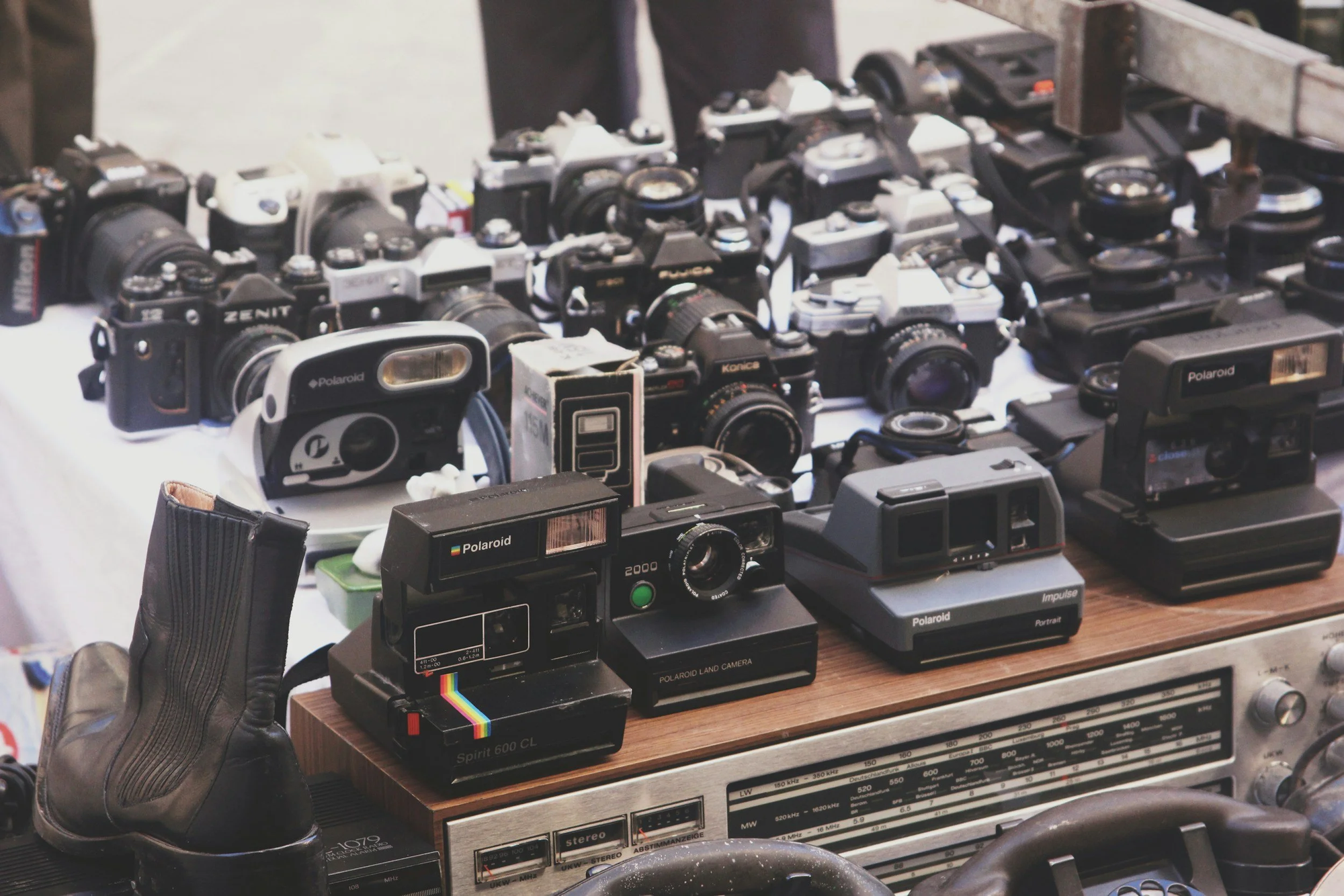
Most vintage cameras are not worth much. Kodak Instamatics and off-brand 110 cameras flood the market and collectors pass on them regardless of how nice the leather case looks. The models below move reliably and are worth learning to spot on sight:
- Pentax K1000 — $50 to $90 working, the standard beginner recommendation in most film photography communities
- Canon AE-1 — $70 to $120, but check for a sticky or stuck mirror, a known issue tied to the shutter magnet aging
- Minolta X-700 — $60 to $100
- Olympus OM-1 — $80 to $140, the compact body draws buyers who find full-size SLRs bulky
- Nikon FM / FM2 — $100 to $180
- Leica M-series — $500 and up, with the lens attached changing the math significantly
Condition matters more than age, and a few specific checks separate a real find from a paperweight:
- Fungus versus haze: fungus etches the glass permanently and looks like thin spiderweb branches under a flashlight angled through the lens; haze wipes away during a standard lens cleaning and doesn't hurt resale value nearly as much
- Sticky light seals: foam seals that have turned to black goo are a six-dollar kit and a twenty-minute fix, not a reason to walk away from a good price
- Meter accuracy: compare the in-camera reading against a phone light meter app in identical lighting; anything off by more than a full stop needs disclosing in the listing
- Battery compartment corrosion: common on older bodies built for the discontinued mercury PX625 cell, visible as green buildup around the terminals, fixable but worth factoring into the offer
- Shutter consistency: fire through the full range from 1 second to 1/1000, listening for a steady sound rather than a hesitation or catch at any speed
When pricing, pull sold listings on eBay filtered to the exact model and a matching condition, not active listings, which only show what sellers hope to get.
Selling Without Losing the Margins
A listing with the right photos and a test roll attached sells faster and for more than one without them. A minimum photo set includes the front, back, top plate, bottom plate, lens front, lens rear, an open film compartment showing the seals, the serial number, and a close-up of any flaw. Shooting a roll through the camera and including two or three scanned frames in the listing signals a working camera far more convincingly than a written description, and most competing listings skip this step entirely.
Descriptions should state plainly whether the shutter's been tested across speeds, whether the meter matches a reference reading, and what's included beyond the body. Vague listings get fewer offers and lower ones.
Platforms behave differently enough to matter:
- eBay: the largest audience for film gear, but final value fees run close to 13%, so factor that into the target price before listing rather than after
- Etsy: strong for buyers treating cameras as display objects, weaker for buyers asking technical questions about shutter reliability
- Facebook Marketplace and local camera trading groups: no fees and no shipping risk, though expect more lowball offers since there's no competing bidder to create urgency
- KEH Camera trade-in: pays less than a private sale but pays instantly and takes non-working bodies most private buyers won't touch, useful for clearing a backlog fast
Shipping damage kills more deals after the sale than bad photos do before it. A camera and lens shipped together in a single layer of bubble wrap inside a padded envelope is how bodies arrive cracked. The safer method wraps the camera on its own, boxes it, then places that box inside a larger one with two inches of padding on every side. Lenses ship separately from bodies when possible, and the full sale price gets insured rather than a rounded-down guess.
Leaving roughly 10% of room in the asking price absorbs the lowball offers that show up on nearly every listing without cutting into the actual margin.
None of this requires special expertise, mostly a habit of checking sold prices before buying and disclosing every flaw before selling. Kept up consistently, the backlog of unsold cameras stays a lot smaller than it could be.
Not sure you're getting the best deals? SellRaze keeps your inventory in sync and helps you track competitive pricing, so you never miss out on a sale. Start optimizing your listings today!