The Ultimate Guide to Wholesale Reselling in 2026
by Joem Castones •August 19, 2026
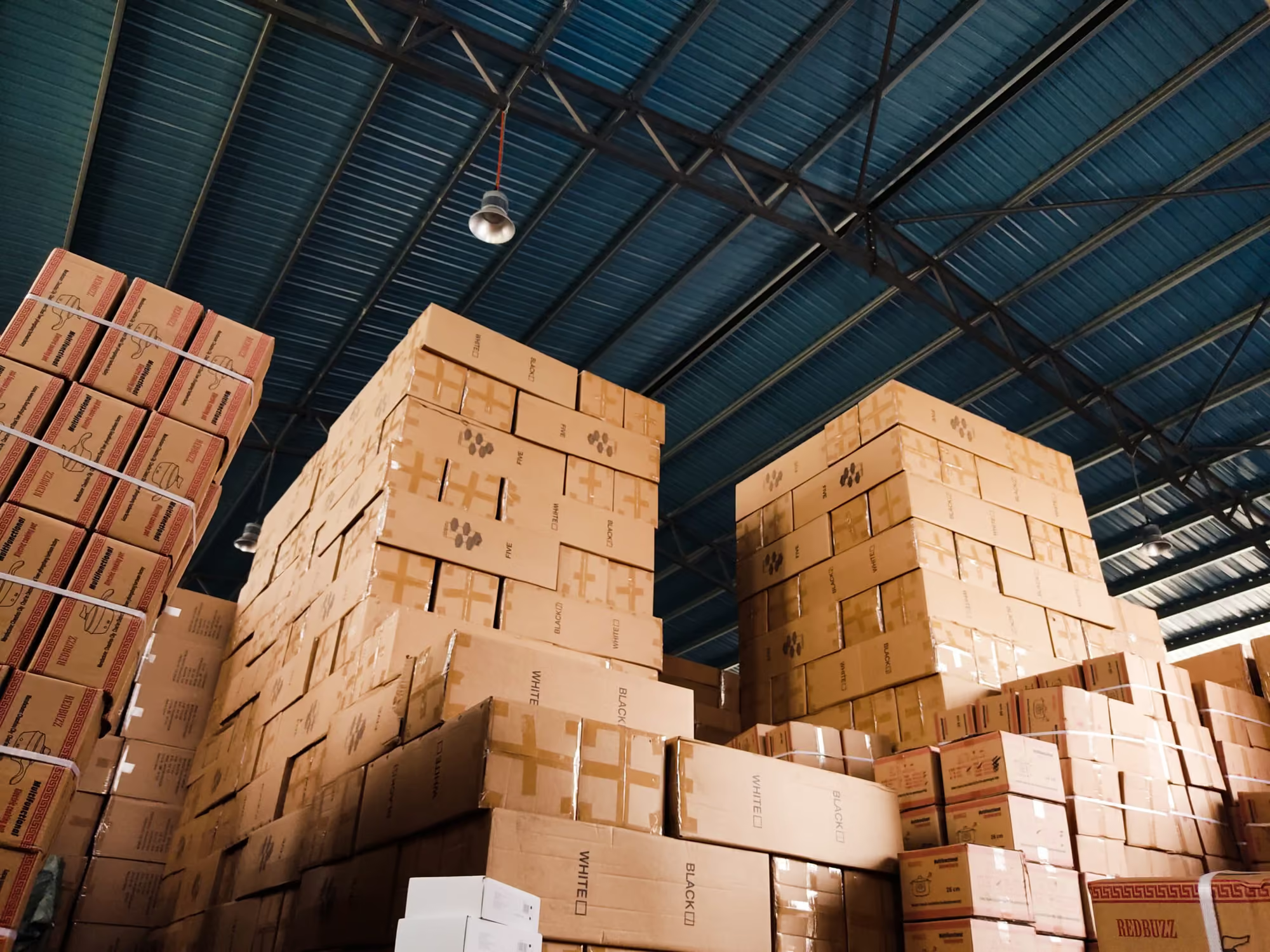
The e-commerce landscape looks significantly different than it did a few years ago. Algorithmic changes, shifting marketplace fees, and direct-from-manufacturer competition have altered how retail works. Amidst these changes, wholesale reselling remains one of the most reliable ways to build a sustainable retail company. Buying products in bulk from established brands and selling them for a retail profit gives you a built-in audience and a predictable supply chain.
Success this year requires updating your operational playbook. The days of simply buying a pallet of random goods, listing them on Amazon, and waiting for the money to arrive are gone. Succeeding today demands strict brand relationships, advanced inventory software, and a clear understanding of your chosen platform's rules.
The Realities of the Wholesale Landscape
Wholesale reselling is fundamentally a logistics and relationship game. You purchase inventory directly from a manufacturer or an authorized distributor at a discount. You then list those products on Amazon, eBay, TikTok Shop, or your independent Shopify site. Because the brand already spent the money to build customer demand, you do not need to worry about product development or initial marketing.
However, brands are much more protective of their digital presence now. Many companies have spent the last two years cleaning up their distribution channels. They are actively eliminating unauthorized third-party sellers who tank prices or ruin customer experiences. To secure profitable wholesale accounts, you must present your business as an asset to the brand rather than another faceless reseller.
Marketplace dynamics have also shifted. Amazon remains the dominant platform, but fee structures reward efficient fulfillment. Meanwhile, TikTok Shop has introduced native checkout options that reward sellers who can ship quickly and maintain inventory for viral products. Diversification is no longer a luxury; it is a strategy for long-term survival.
Finding and Vetting Real Wholesale Suppliers

The biggest hurdle for new resellers is separating legitimate suppliers from middlemen who pose as wholesalers. True wholesalers require a registered business license, an Employer Identification Number (EIN), and a resale certificate. If a company lets you sign up without these documents, they are likely a retail arbitrage site or a drop-shipper masquerading as a bulk distributor. Your margins will be too thin to sustain a real business.
To find legitimate partners, focus on three primary avenues:
- Trade Shows: Attending industry-specific events like ASD Market Week or regional distributor shows remains the most effective way to meet decision-makers. You can shake hands, look at product quality, and negotiate opening order minimums face-to-face.
- Direct Brand Outreach: If you notice a mid-sized brand selling well on Amazon but their listing has poor images or unanswered customer questions, reach out to them directly. Ask for their wholesale division or sales manager.
- Authorized Distributor Directories: Use vetted databases like Worldwide Brands or ThomasNet to find verified distributors who hold official licenses to sell major brands in bulk.
When you contact these companies, skip the generic emails. Suppliers receive dozens of copy-pasted messages every day from people looking for a quick profit. Instead, introduce your company, state your purchasing capacity, and ask for their product catalog alongside their Minimum Order Quantity (MOQ) requirements.
Analyzing Product Catalogs for Profit
Once a supplier approves your account, they will send you a price list. This is often a massive spreadsheet containing thousands of rows of UPC codes, product descriptions, and wholesale prices. Analyzing this manually takes too long and leads to errors.
Professional resellers use software like Tactical Arbitrage or Wholesale Inspector to scan these sheets against live Amazon or eBay data. The software calculates your potential profit margins after subtracting marketplace referral fees, storage costs, and shipping fees.
You need to look beyond the immediate profit margin during your analysis. Examine the historical sales velocity using data tracking tools like Keepa. A product that offers a 50% profit margin is useless if it only sells twice a month. Look for items with stable pricing histories. Avoid products where the marketplace operator itself is the primary seller, as they can easily undercut your price and hold the buy box indefinitely.
Calculate your landing cost accurately. This includes the price of the item, the cost of shipping from the supplier to your warehouse, the cost of poly bagging or labeling, and the cost of inbound shipping to a fulfillment center. Missing even one of these variables can turn a profitable order into a net loss.
Navigating Brand Restrictions and Ungating

New seller accounts face restrictions on major brands and categories, such as topical creams, grocery items, or toys. This process is known as gating. Marketplaces enforce these rules to prevent counterfeiting and protect consumers.
To unlock these categories, you must submit an official invoice from an authorized distributor or manufacturer. The invoice must include the supplier's contact information, your matching business details, and a purchase quantity of at least ten units of the restricted item.
Do not attempt to forge these documents or use retail receipts from big-box stores. E-commerce platforms use advanced verification methods and will permanently ban accounts that submit falsified documentation. Treat the ungating process as a standard business step. Budget for your initial opening orders specifically to unlock target categories, even if those first ten units only break even.
Managing Capital and Cash Flow
Wholesale reselling requires upfront capital. Unlike dropshipping, you must buy the inventory before you can sell it. Managing your cash flow determines whether your business survives its first year.
Your cash flow cycle looks like this: you pay the supplier, wait a week for shipping, spend a few days preparing the inventory, wait another week for the fulfillment center to check it in, and then wait for the items to sell. Amazon or other platforms then hold your funds for 7 to 14 days before depositing them into your bank account. This means your capital can be locked up for 45 to 60 days per order.
Avoid spending your entire budget on a single product. If that listing gets suspended or a competitor drops the price, your capital is trapped. Divide your initial capital across multiple brands and smaller test orders. Once a product proves it sells consistently, you can safely reinvest your profits into larger orders to secure volume discounts.
As your relationship with a supplier grows, ask for payment terms like Net-30. This allows you to pay for the inventory 30 days after it ships, giving you time to sell the products and generate revenue before the bill comes due.
Scaling Operations Through Prep and Logistics

When you start, you will likely receive boxes at your home, prep the items at your kitchen table, and drive them to the local shipping terminal. This is fine for learning the basics, but it limits your growth. You cannot scale a wholesale business if your time is consumed by taping cardboard boxes.
To scale, you have two options:
- Third-Party Logistics (3PL): You can hire a specialized prep center. Your supplier ships the inventory directly to the 3PL warehouse. The warehouse staff inspects the goods, applies the required barcode labels, packages them according to marketplace guidelines, and ships them to the fulfillment hubs. They charge a flat fee per item, which you must build into your profit calculations.
- Supplier Prep: Some advanced distributors will apply your Amazon FNSKU labels or custom retail tags for a small fee before shipping. This completely removes the middle step from your logistics chain.
Outsourcing your logistics frees up your schedule to focus on high-value tasks: finding new suppliers, analyzing larger catalogs, and negotiating better pricing terms.
Building a Long-Term Competitive Advantage
To build a lasting enterprise, you must create value that competitors cannot easily duplicate.
Move away from public distributors that anyone can find via a Google search. Look for exclusive distribution agreements with smaller, regional brands that want to grow their online presence but lack the internal expertise to do it themselves. Offer to optimize their listings, manage their advertising spend, and clean up unauthorized sellers in exchange for becoming their exclusive e-commerce partner. This transforms your business from a transactional reseller into an indispensable asset.
If you're selling across multiple platforms, managing listings on each one individually gets overwhelming fast. SellRaze lets you create listings with AI and crosslist across all your favorite marketplaces in seconds. It is well worth checking out if you want to save time, avoid manual data entry, and sell more inventory across the web.
Start optimizing your listings today!