
The online clothing resale market is a visual one. We know that photos make or break a listing; that’s why almost all our reselling guides remind you to pay attention to your listing photos.
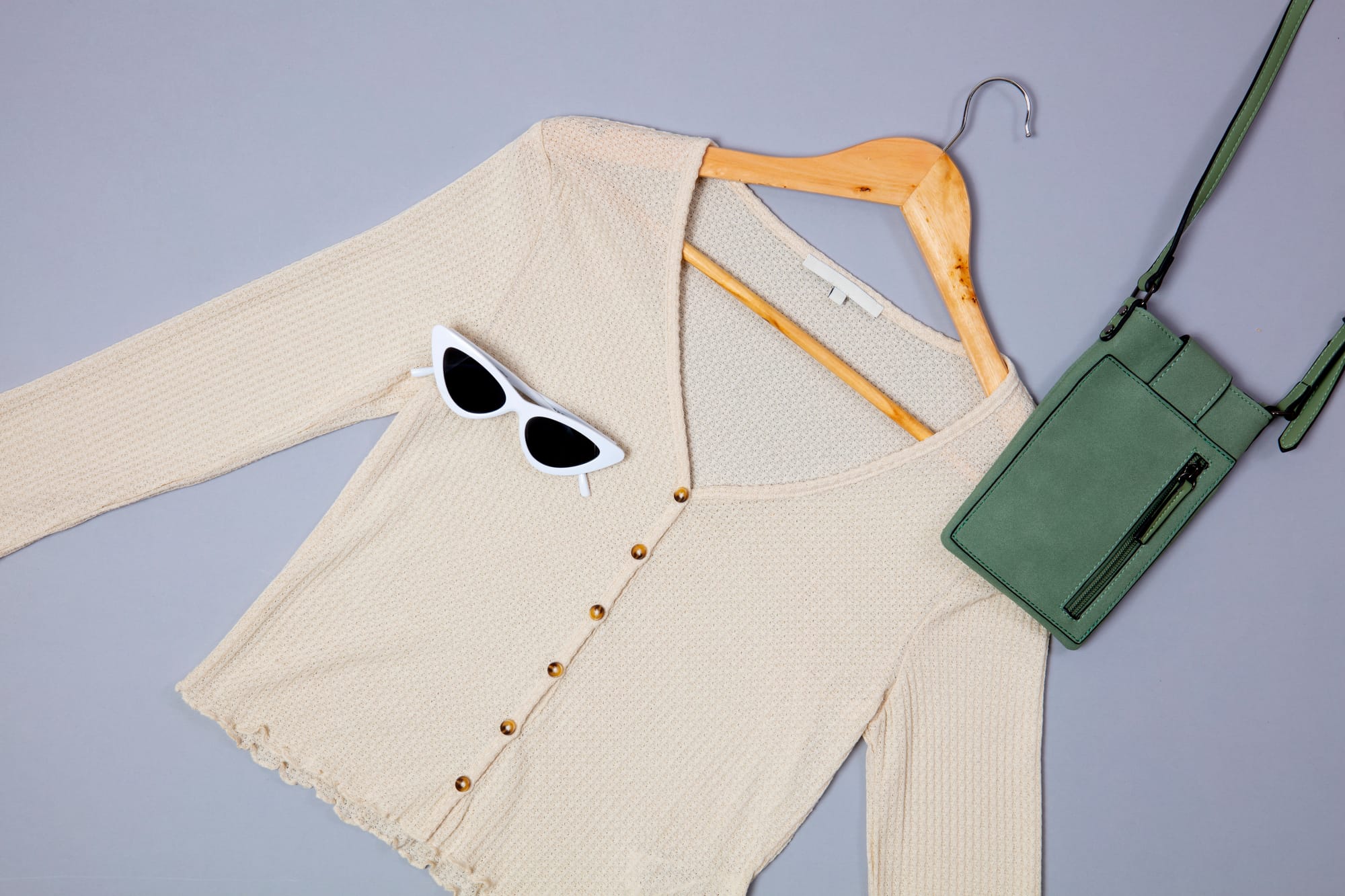
As a beginner, you’ll probably start with flatlays (placing clothes on a flat surface and photographing them from above). You experiment with different backgrounds and lighting. Then you see other resellers displaying clothes on mannequins for their listings, and wonder if you should get one.
Both methods of displaying clothes help resellers take important listing photos. We’ll discuss the qualities of each, as well as explore other setups such as getting a model or even wearing it yourself.
Flatlays 101
Flatlays are arguably the best method to display your items for taking listing images when you’re a newbie. They cost almost nothing, and it only takes a clean background where you can arrange your clothes.
Upgrades are easy to add, like a rug that matches your aesthetic or a silky spread that contrasts well with the color of the shirt or dress you’re photographing. Even rolls of paper can change the mood of your listing photos.
As a beginner-friendly option, it’s also easy to make mistakes when shooting flatlays of your items. The number one mistake: shooting in bad lighting. Even when you use mannequins or models, if your lighting angle is wrong, the photos won’t come out perfect.
Another error made during shoots is not ironing the item. Remember that we are trying to make the best impression with just a photo. When clothes for a flatlay aren’t ironed, they look messy, and makes it harder to notice flaws.
A third mistake resellers make is putting unrelated items in the frame. It takes away the focus on the item. The background should be kept as minimal as possible, with no more than two accent pieces.
Flatlays also lack a three-dimensional feel. Some buyers prefer to see how items look when worn. It’s also easy to miss little flaws in flatlays, unless you go out of your way to show them in separate photos.
Our tips for shooting flatlays:
- Lay the item as flat as possible.
- Smooth out creases and iron them. Avoid bunching.
- Shoot from several angles to highlight item details.
- Choose natural lighting as much as possible. When natural light is unavailable, you may use other lighting sources provided they don’t cast a shadow on your item.
- Try not to have clutter in the surrounding area.
Should I get a mannequin?
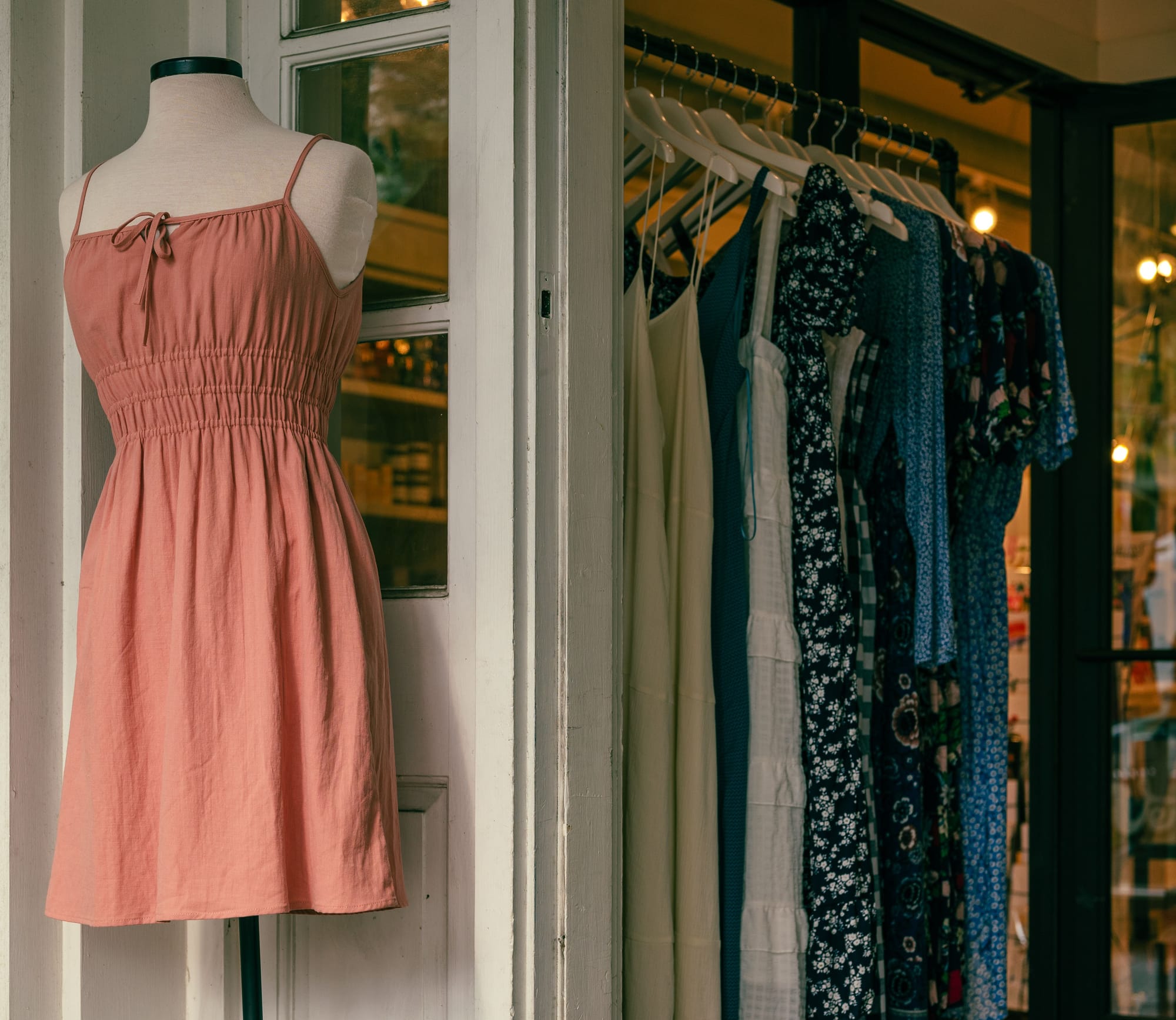
If you’re just starting, flatlays will suffice, but once your inventory starts growing, it’s a good idea to get yourself a mannequin or dress form.
Mannequins allow you to take photos of how a clothing item drapes on the figure when worn, especially with tops and dresses. You can also use clips at the back of the mannequin to make clothes appear more form-fitting.
Mannequins are great for structured pieces, as they allow clothing details to shine. You can better showcase padded shoulders well, how sleeves fall, and how necklines look when worn.
The same mistakes in making flatlays can still happen even when you’re using a mannequin. Bad lighting casts unsightly shadows, creases can make clothes look shabby, and a bad background can still ruin a photo even if you had the item on a mannequin. Using too many props to achieve a certain aesthetic can distract the buyer’s attention from the item.
These are our tips for shooting listing photos on a mannequin:
- Prioritize good lighting and good angles.
- Prep clothes properly before putting them on the mannequin. Iron out the creases. Use clips to fit the clothing around the figure.
- Neutral backgrounds are the best to avoid overpowering your clothing items.
Hung and worn
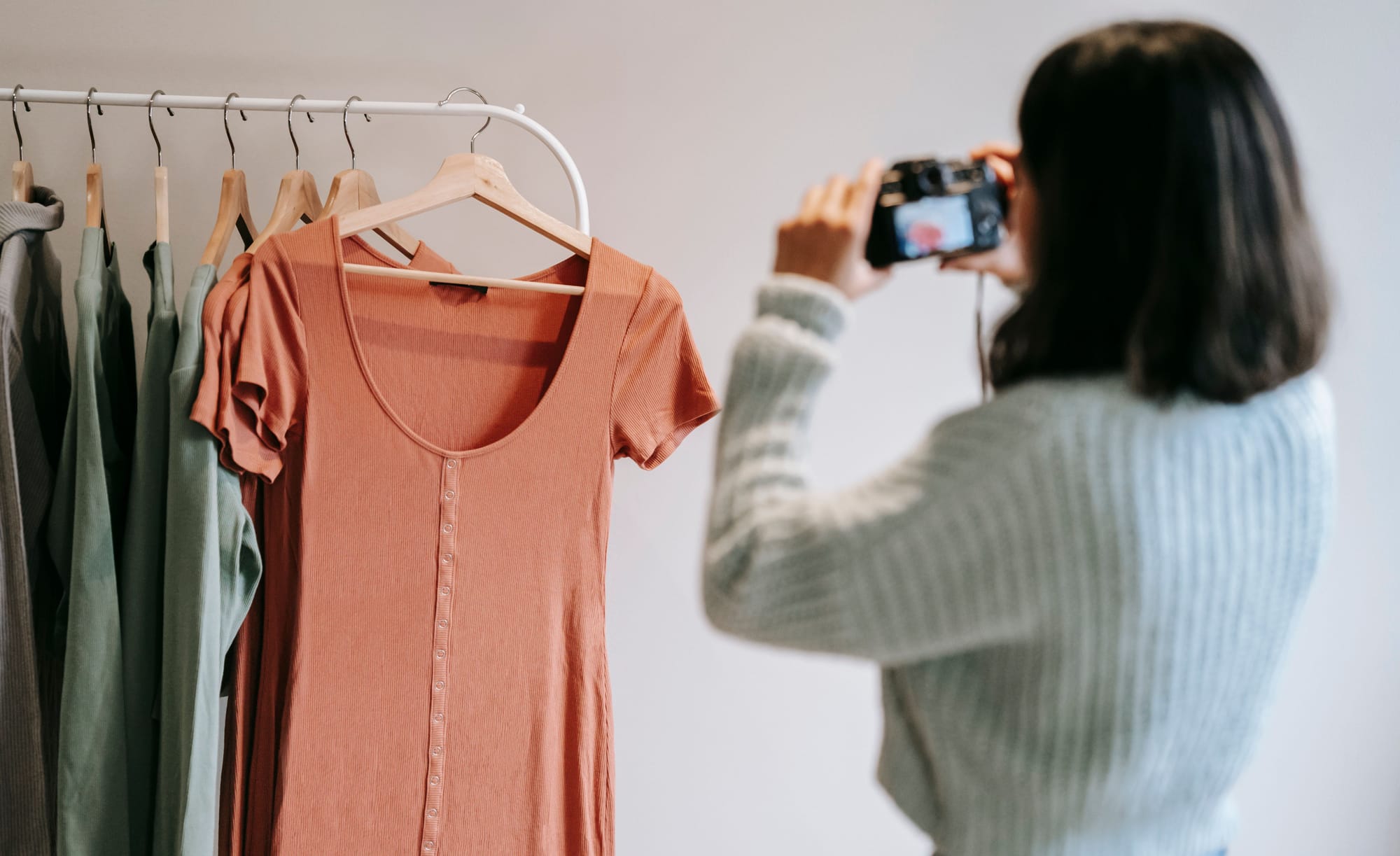
Maybe you want to move on from flatlays but still feels unsure about getting a mannequin. Another option for showcasing your clothes in listing photos is by using hangers. They're a little better than flatlays because hanging shows how clothes naturally drape. Use padded hangers to “puff” up the clothes you’re shooting.
You can also choose to wear the items. This method works very well if the clothes are of your size and fit, like when you’re having a closet revamp. But this may not work as well when you're selling clothes in smaller or bigger sizes.
For resellers, you can also have someone model the clothes, whether hired or not. However, this is not a popular option, as hiring a model would add to business costs.
The Temptation of AI
How about using AI to generate listing photos? Take a picture of the item, type in your prompts, and voila! You get an image of the clothes, as worn by a person with your specified size, height, and body type. It may look amazing, but AI listing photos can be misleading. While some platforms may allow these type of listings like these, buyers may hesitate to purchase clothing items that are generated by AI.
The Bottom Line
In general, these several methods of showcasing clothes for listing photos all depend heavily on good photography and product preparation. However, we recommend starting with whatever is accesible for you right now without taking too much time and effort. You can do flatlays alone, mannequins alone, wear your clothes, or have someone model it. You can even have listing photos using all these methods. As your inventory grows, you can decide which option works best for your business.